Try ShortPoint now
Want quick access to a group’s drives? You can easily do that with the Microsoft Graph API connection! In our example, we will get all the document libraries of our IT department group.
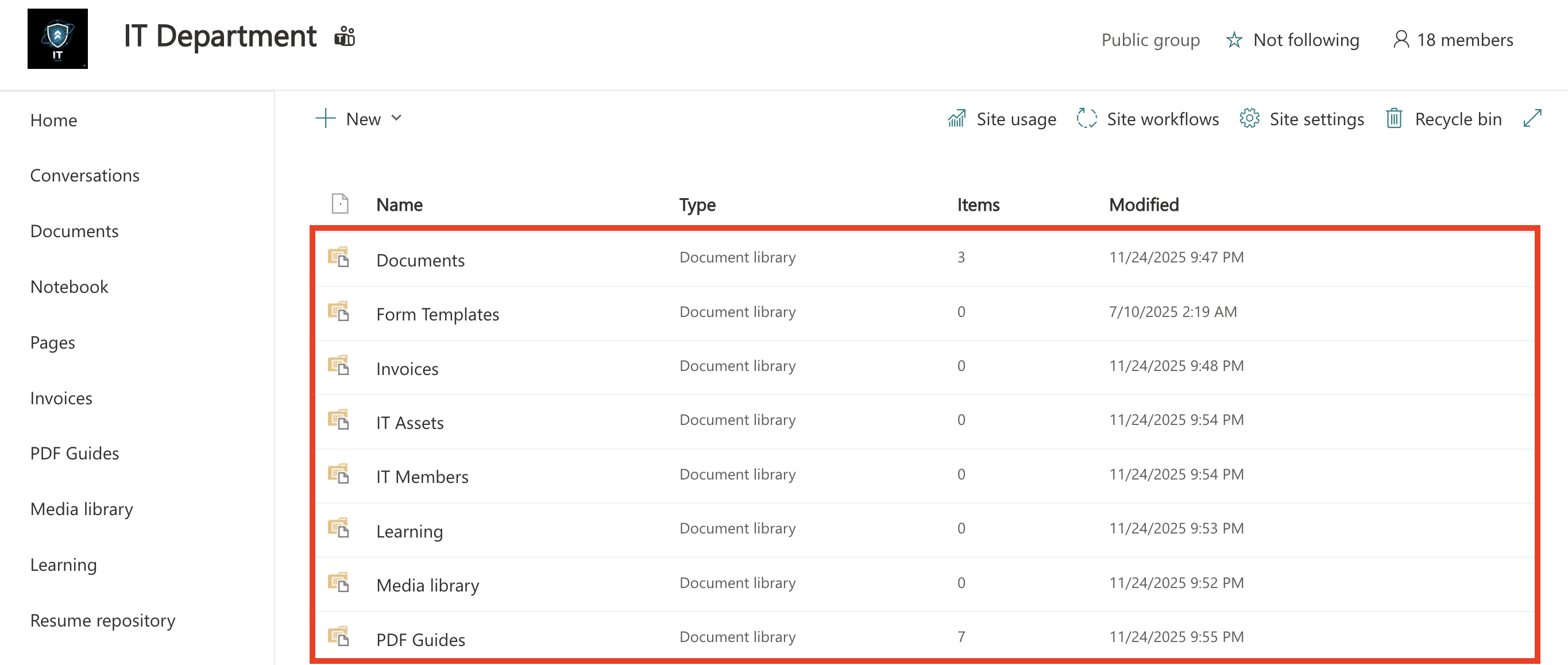
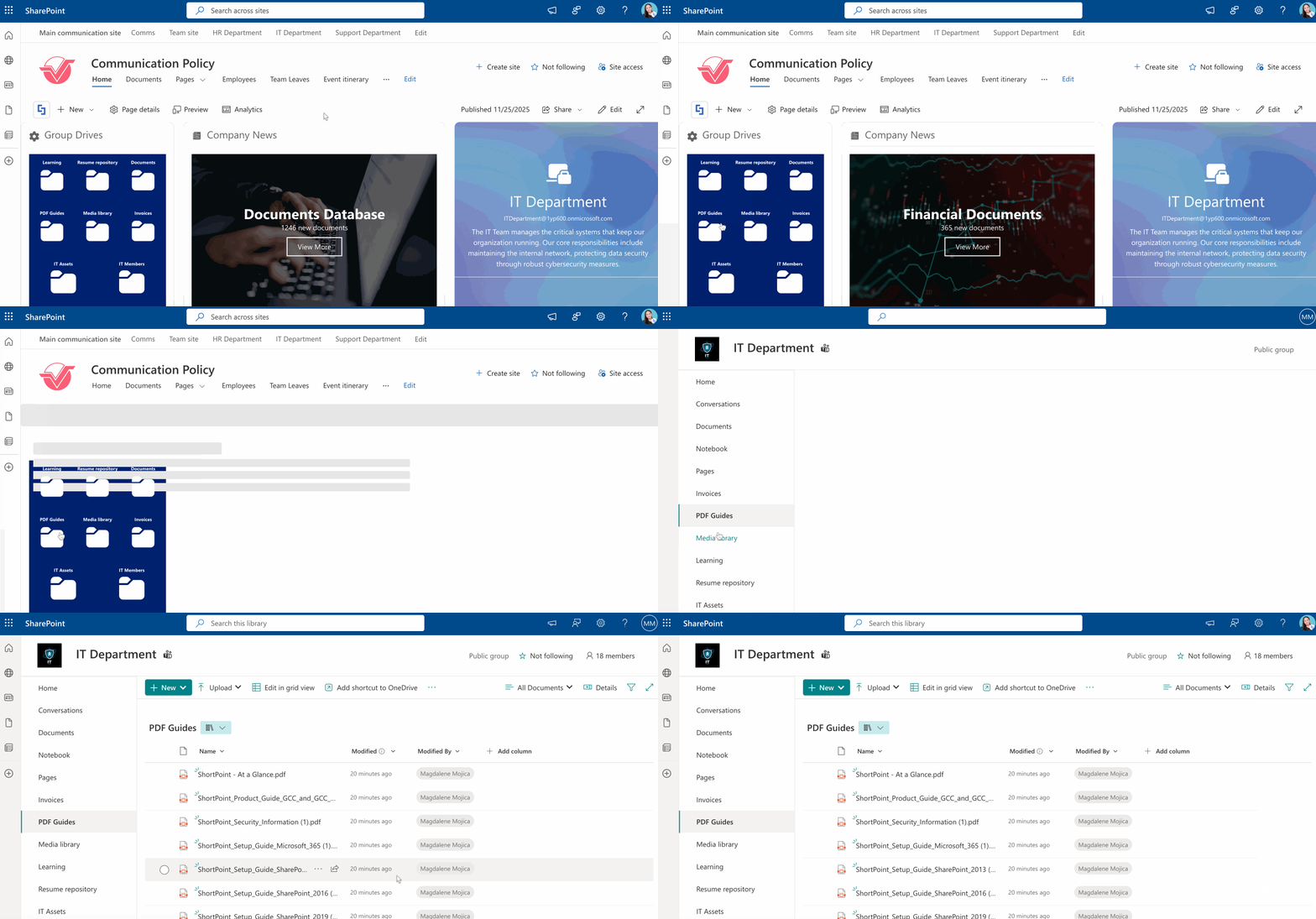
Simply use the “Group’s Drives” use case, and all the drives and document libraries of a specified group will be displayed on your SharePoint page. Follow the steps in the Step-by-step Tutorial to learn how to establish the connection.
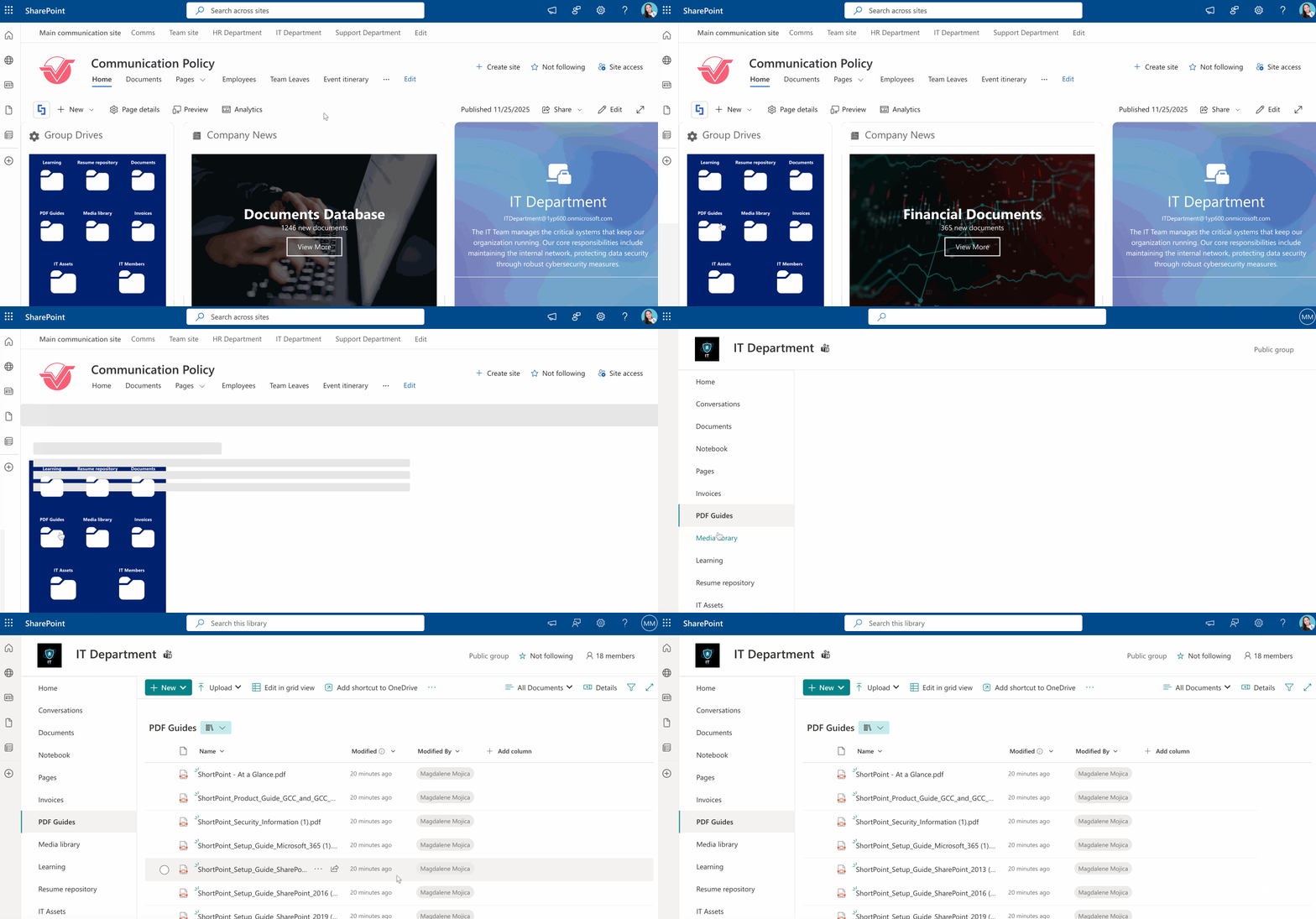
TABLE OF CONTENTS
Prerequisites
- You must have ShortPoint SPFx version 8.6.0.0 and up installed on your SharePoint environment.
- You also need to be a ShortPoint Designer with either a Pro or Enterprise license. For more details, check out Licensing Options.
- You must have the Microsoft Graph API connection enabled. Go to How to Enable Microsoft Graph Integration for MS Graph API Connections to learn how.
- You must authorize the necessary permissions (Files.Read and Files.Read.All, and Sites.Read.All) in the API access page. To check, go to your SharePoint Admin Center > Advanced > API access.
- You must have the Design Element you want to use to connect on your SharePoint page. For best results, we recommend using Design Elements that allow listing of multiple items (e.g. Icon List, Image List, Simple List, etc.).
What is the “Group’s Drives” Use Case?
The Group’s Drive use case leverages a Microsoft Graph API GET query to list all the drives of a designated group.
The typical structure of this use case is:
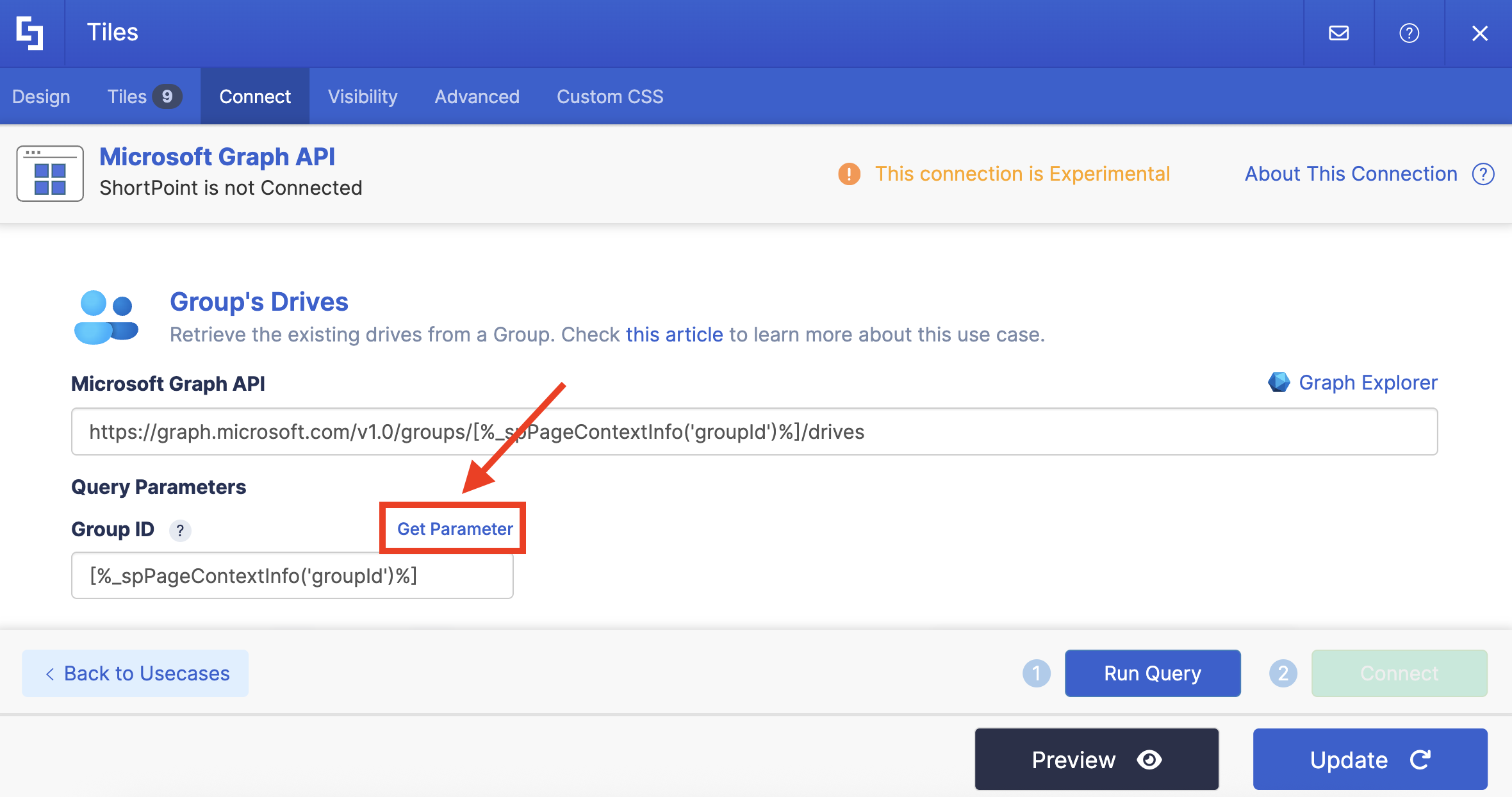
https://graph.microsoft.com/v1.0/groups/[%_spPageContextInfo('groupId')%]/drivesWhere you need to get the following parameters:
- groupId - is a unique identifier associated with a particular group. You can learn more about this in How to Get the Group ID.
Once connected using 'Group’s Drives', you can display all the drives and document libraries of the specified group and link them directly to the source page.
You must enable the following permissions in the SharePoint Admin Center to use it:
- Files.Read - this permission grants the app access to read your files.
- Files.Read.All- this permission allows the app to read all files you can access.
- Sites.Read.All - this permission grants the app access to read documents and list items in all site collections.
NOTEIf you haven’t given access to the permissions above, go to your SharePoint Admin Center > Advanced > API access.
Step-by-step Tutorial
Follow the steps below to learn how to use the Group’s Drives use case:
Step 1: Edit the ShortPoint Web Part
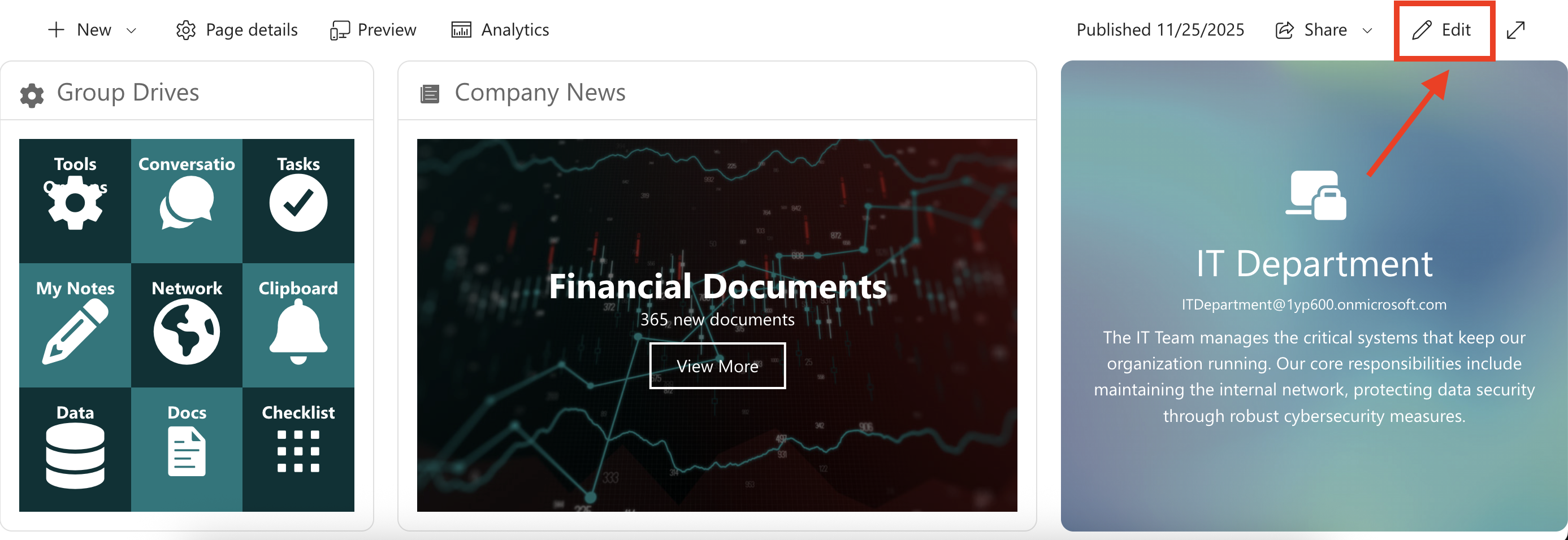
Go to the SharePoint page you want to use and click Edit:
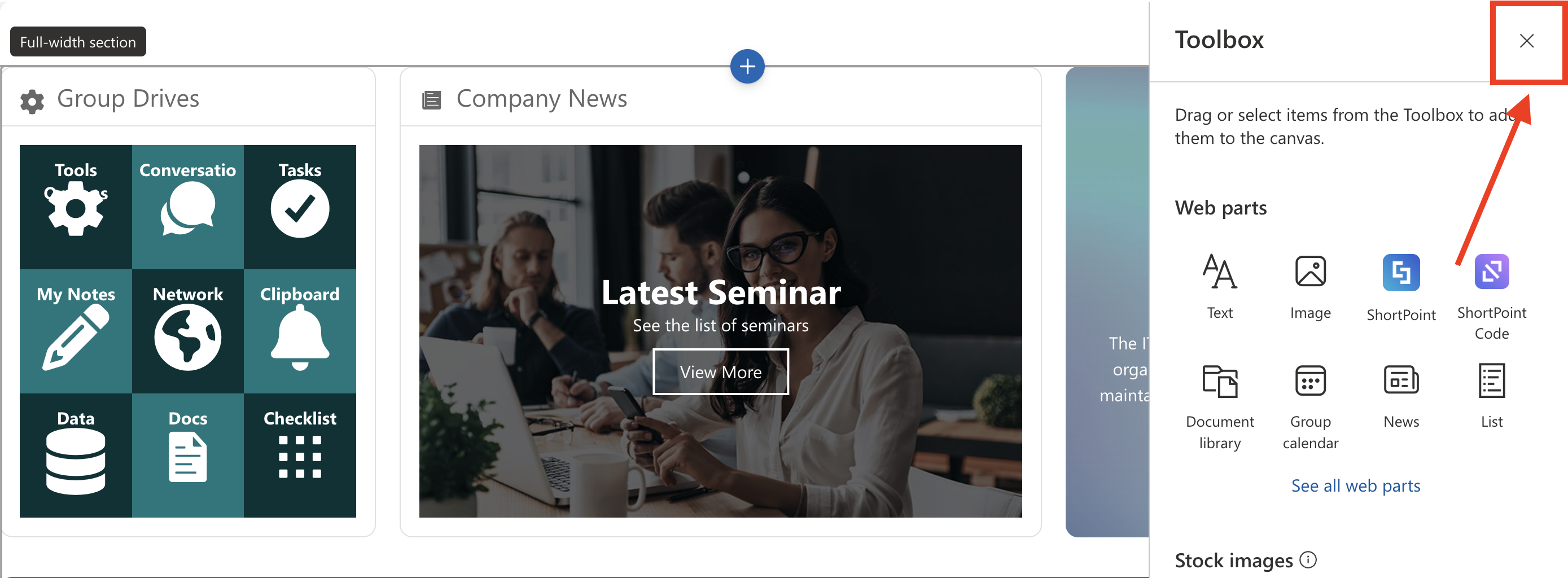
Close the Toolbox:
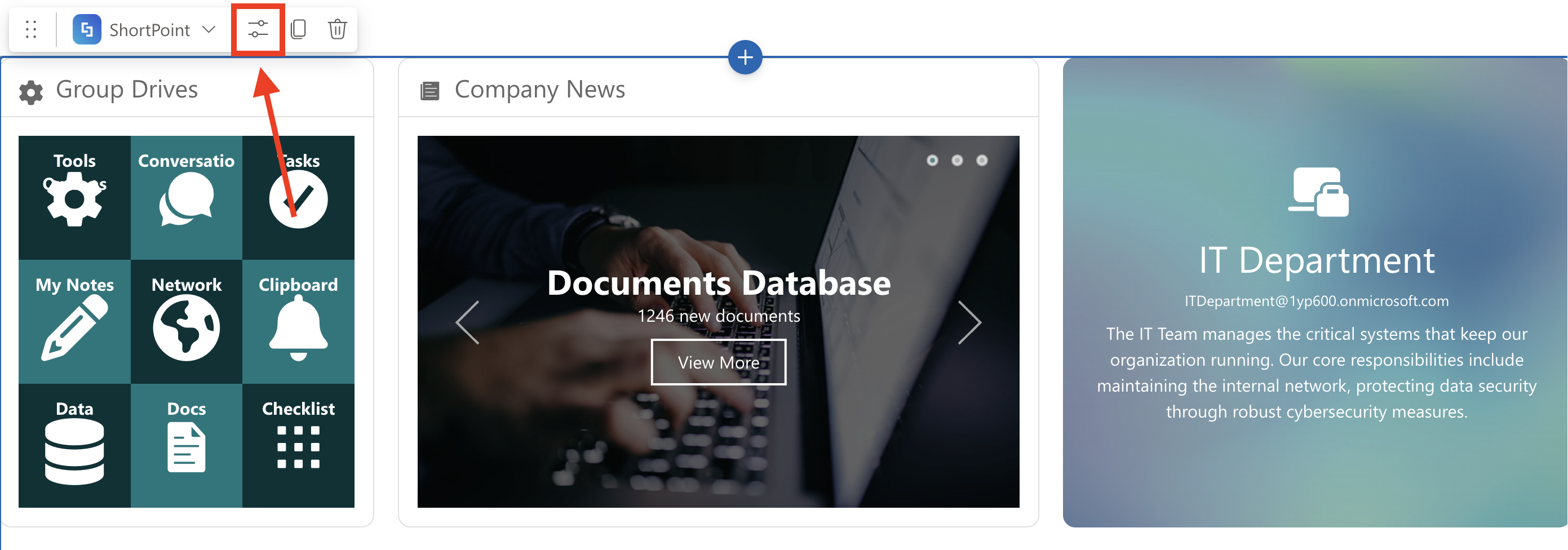
Select the ShortPoint web part and click the Edit Properties icon:
Step 2: Edit the Design Element
NOTEYou can use any Design Element you want. For best results, we recommend using Design Elements that allow listing of multiple items (e.g. Icon List, Image List, Simple List, etc.). For this guide, we’ll use Tiles.
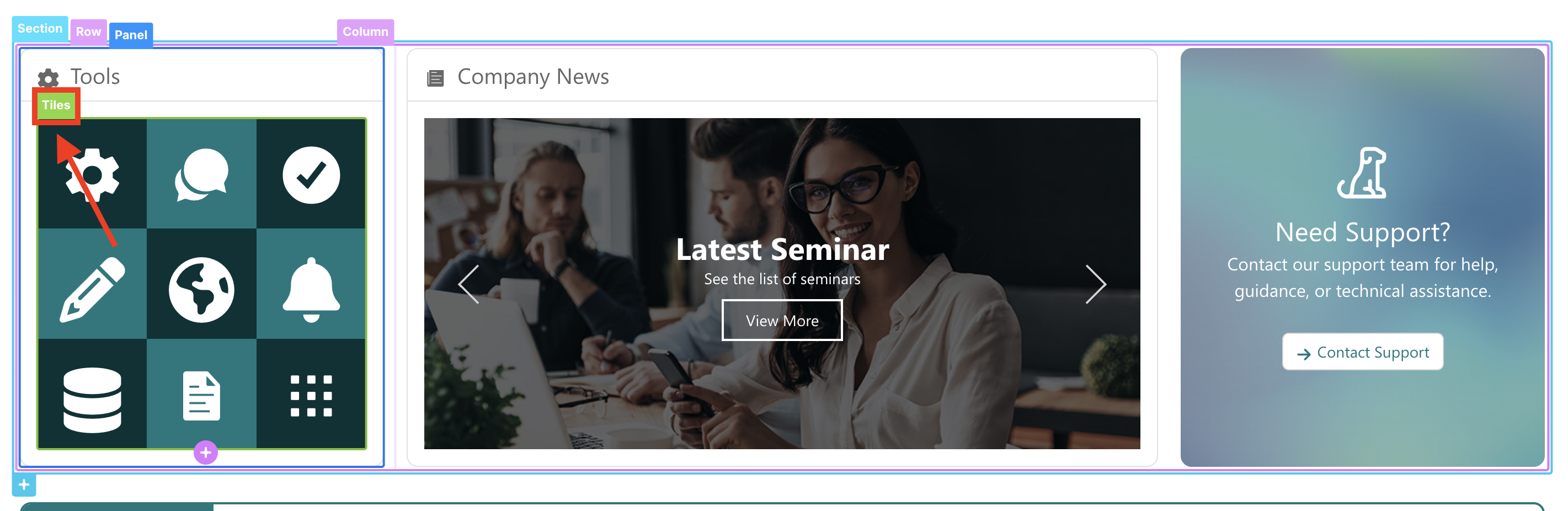
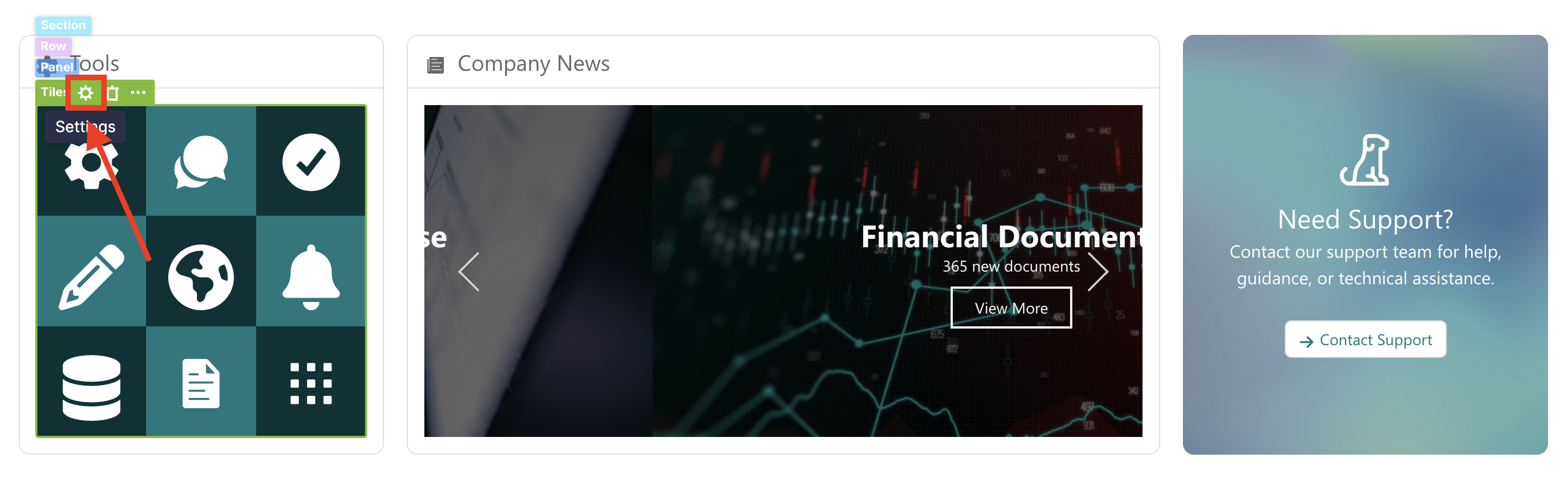
Click the EasyPass tag of the Design Element you’ll use:
Select the cogwheel icon:
Step 3: Open the Connect Window
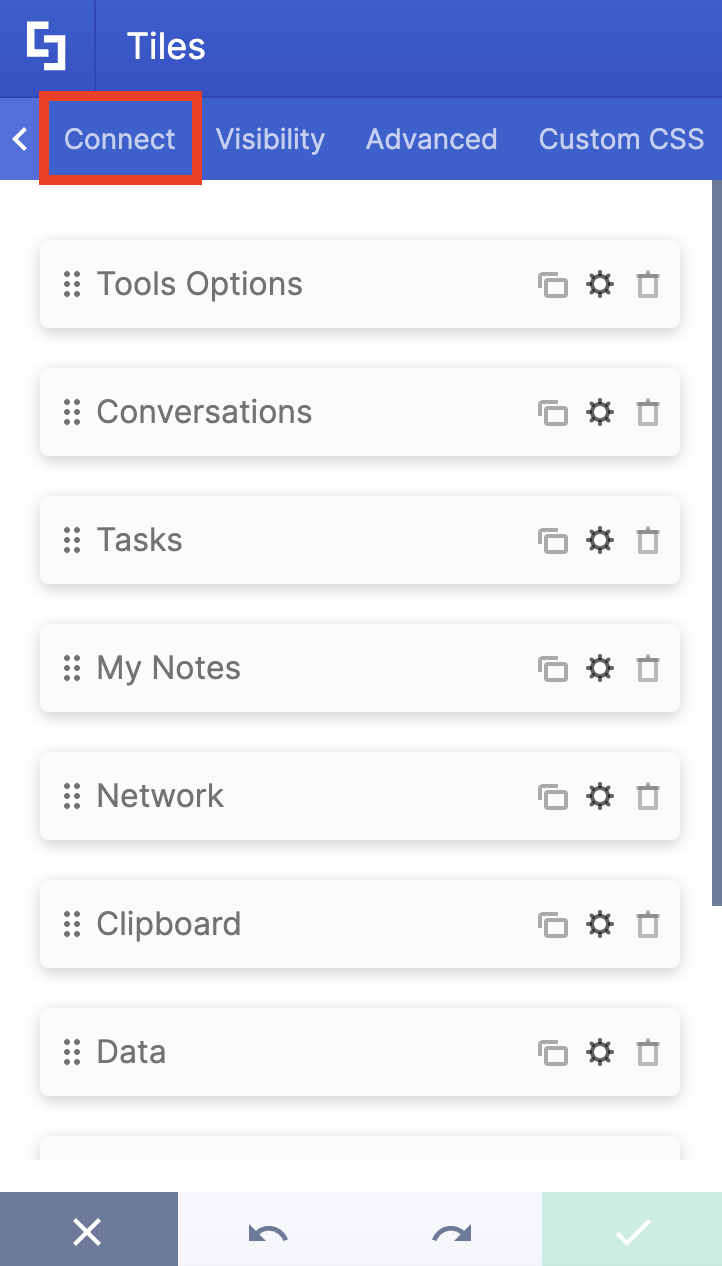
Go to the Connect tab:
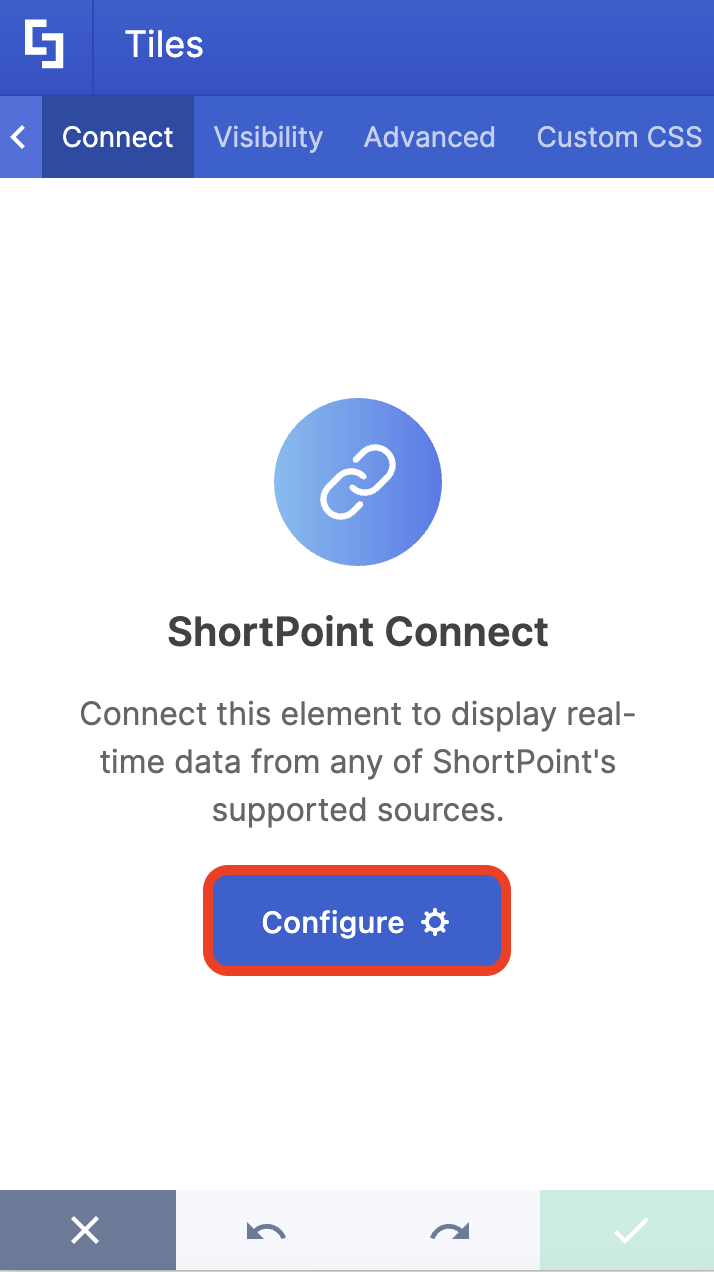
Click Configure to open the connect window:
Step 4: Connect to Microsoft Graph API
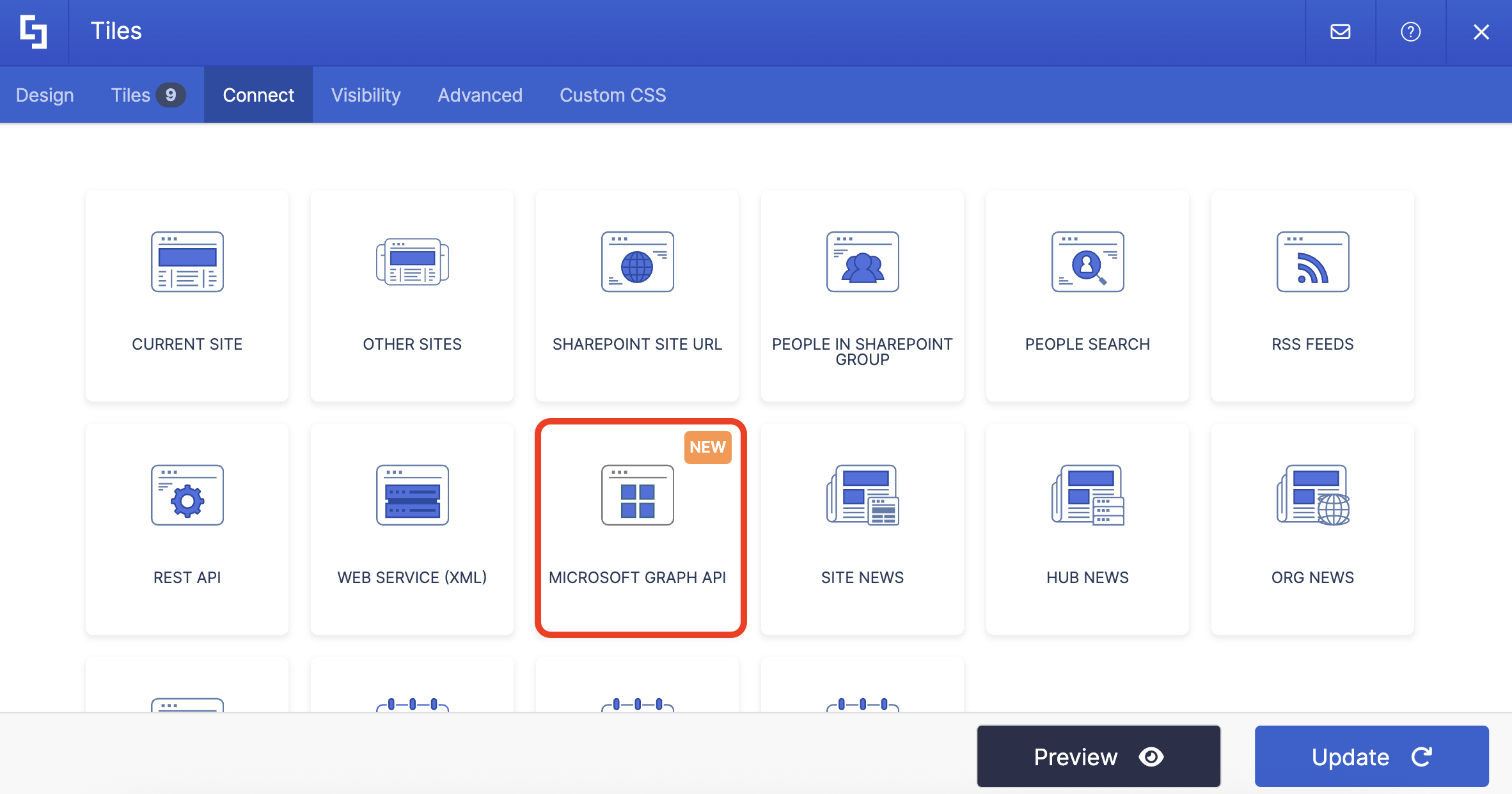
Select Microsoft Graph API:
NOTEYou need to enable the Microsoft Graph API connection before using it. Learn more about it in How to Enable Microsoft Graph Integration for MS Graph API Connections.
Step 5: Use the Group’s Drives Use Case
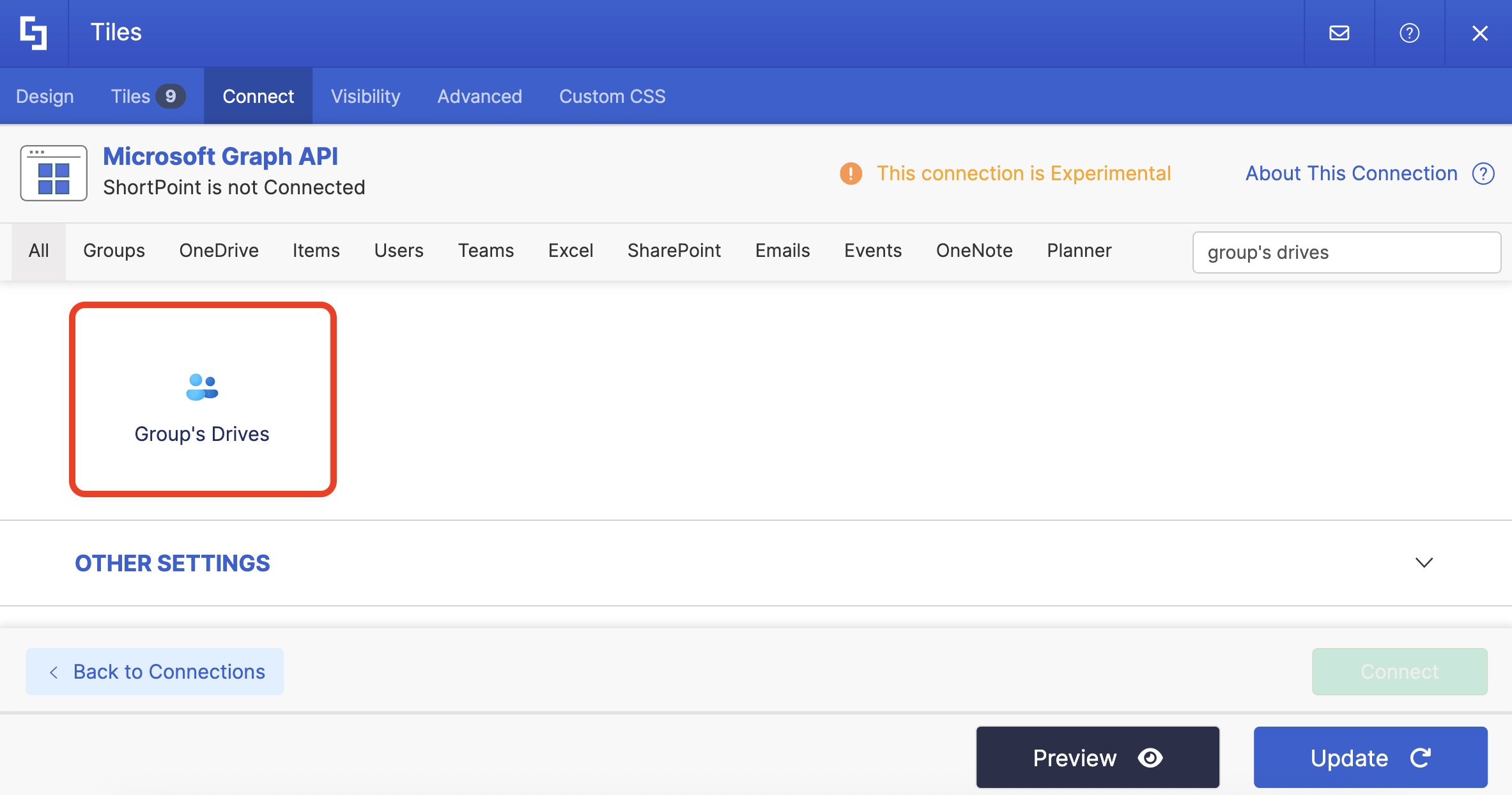
Search for Group’s Drives and select it:
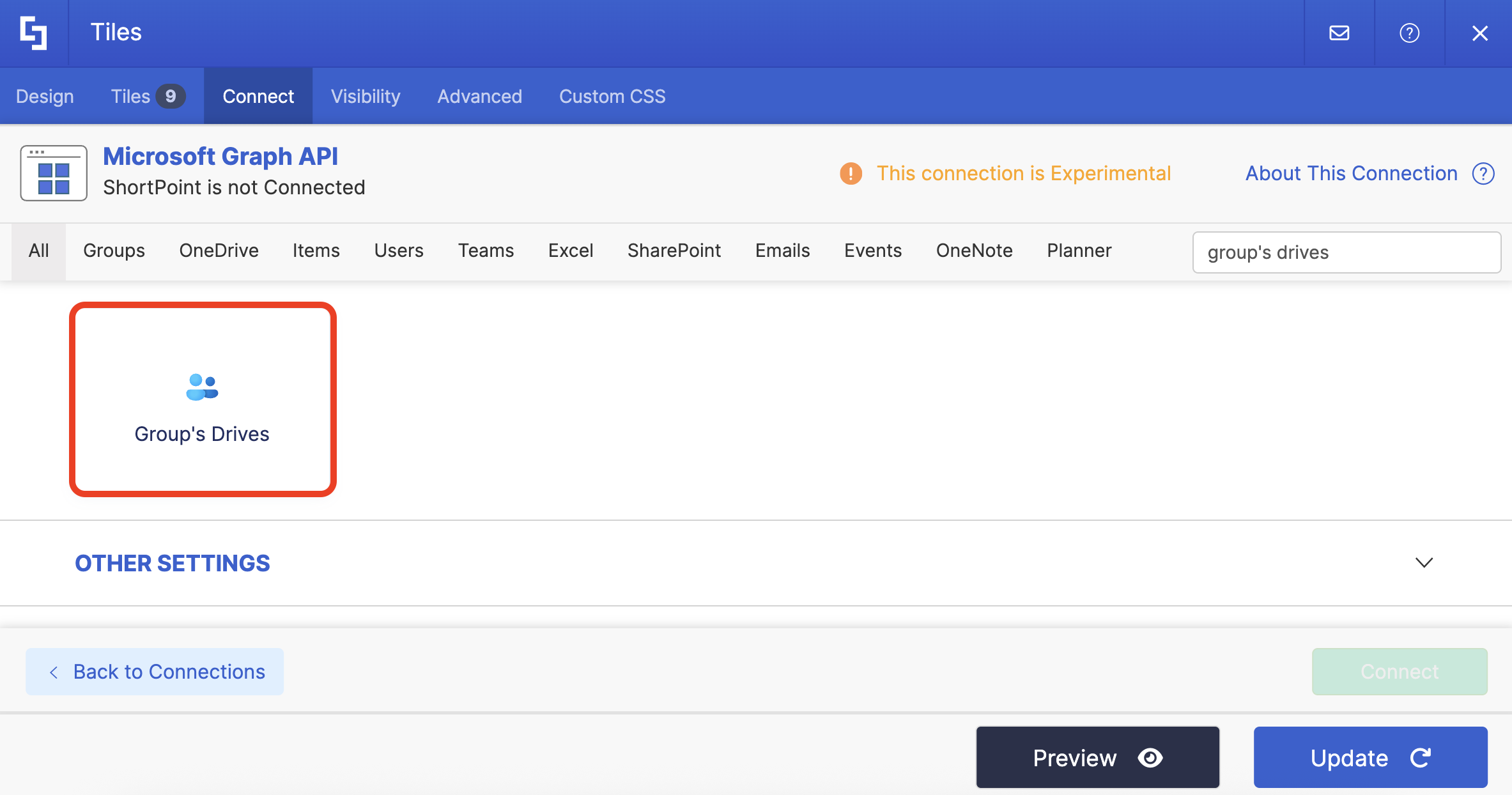
Step 6: Get Group ID
Under Query Parameter, you will need to get certain details. Click Get Parameter:
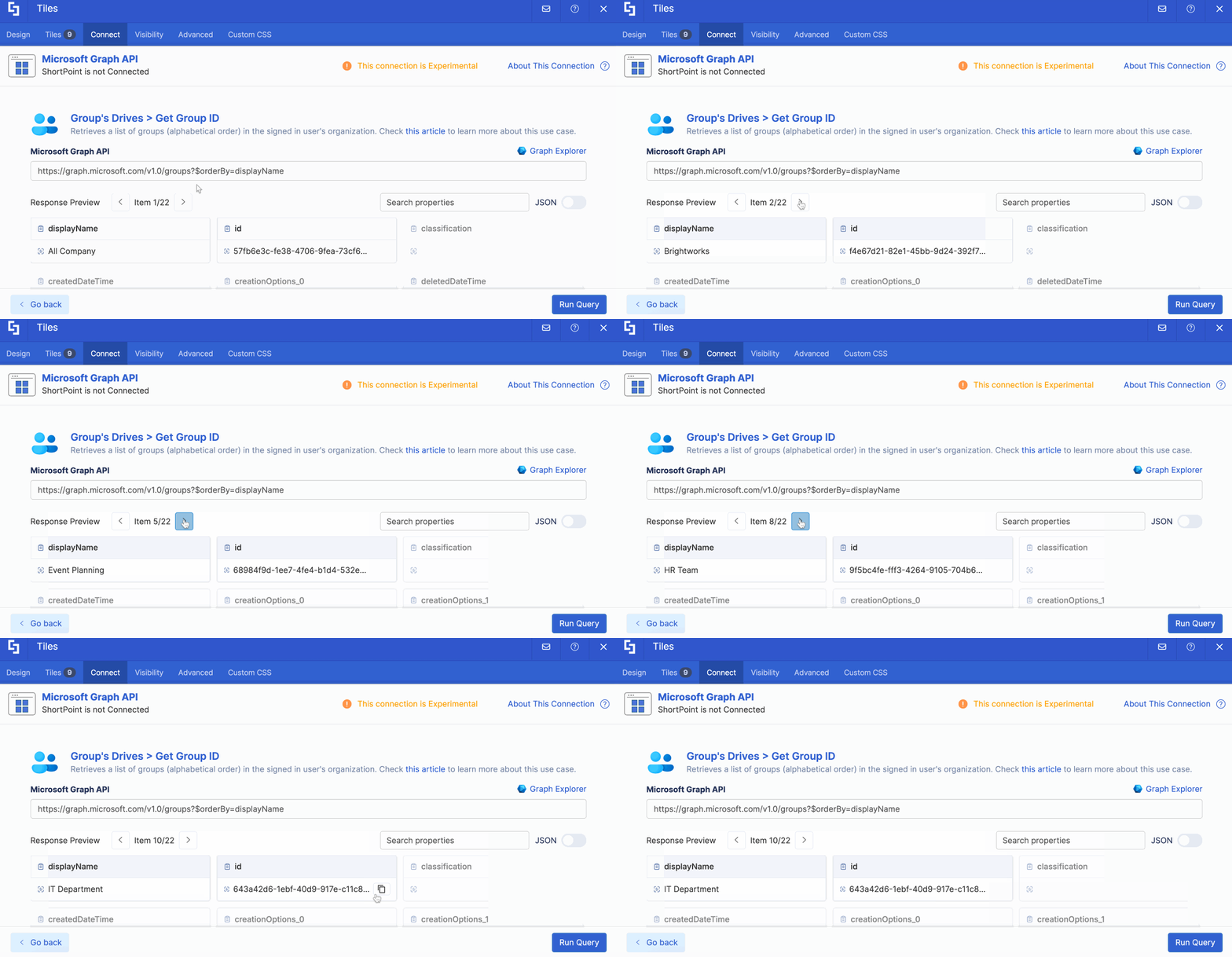
Look for the name of the group you want to use and copy its ID:
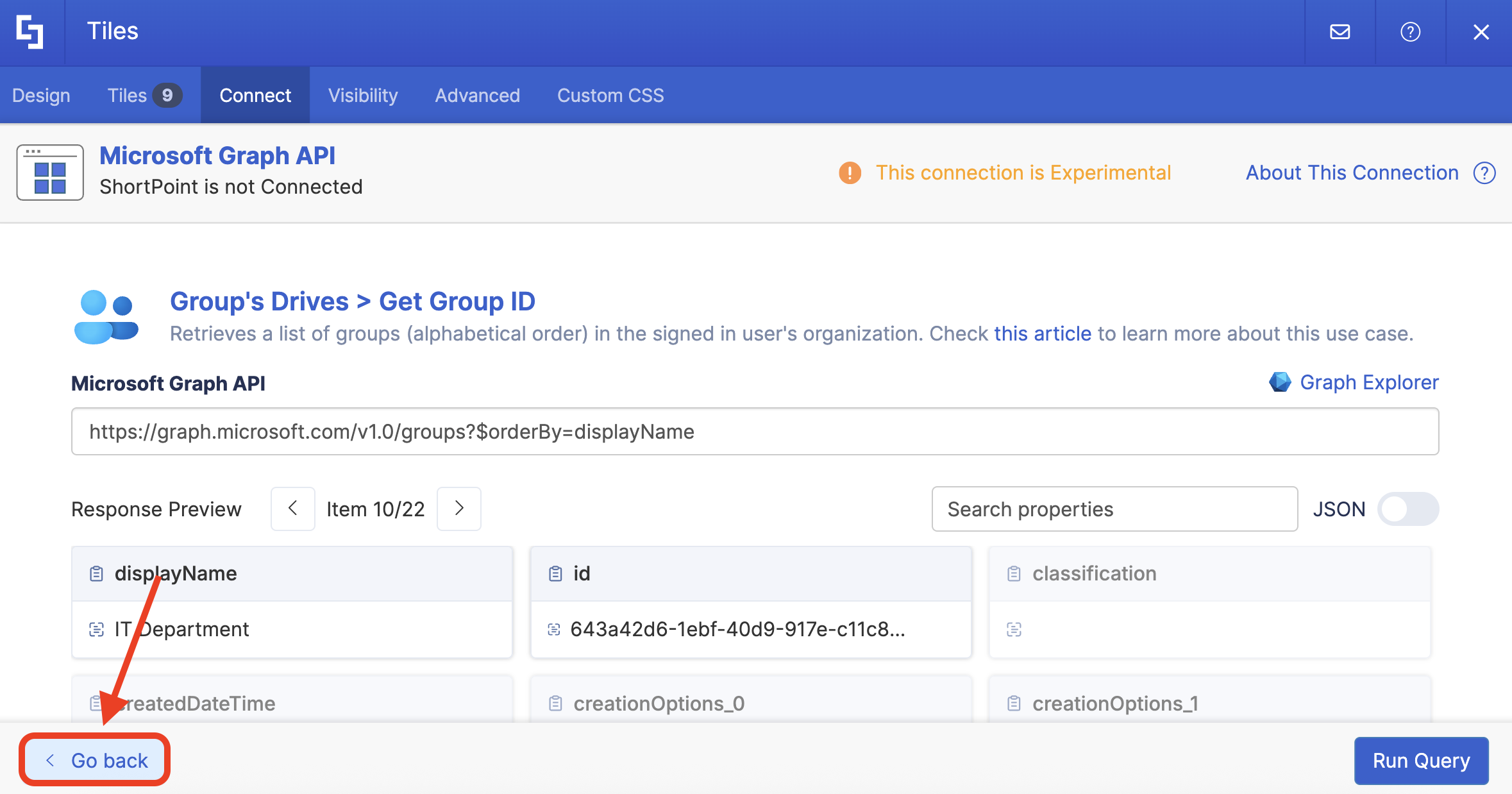
Click Go back:
Paste the copied ID in the field provided:
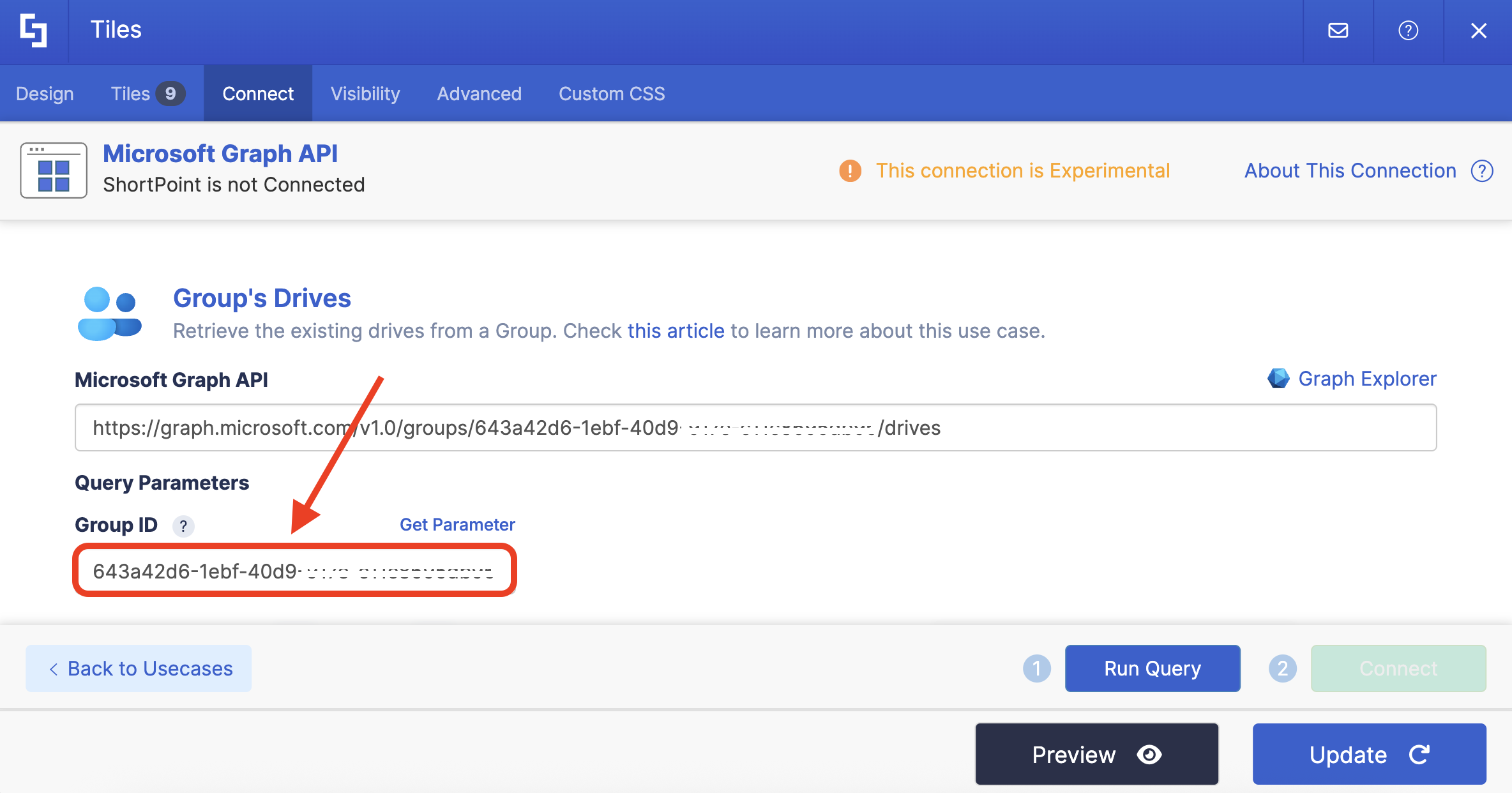
Step 7: Connect
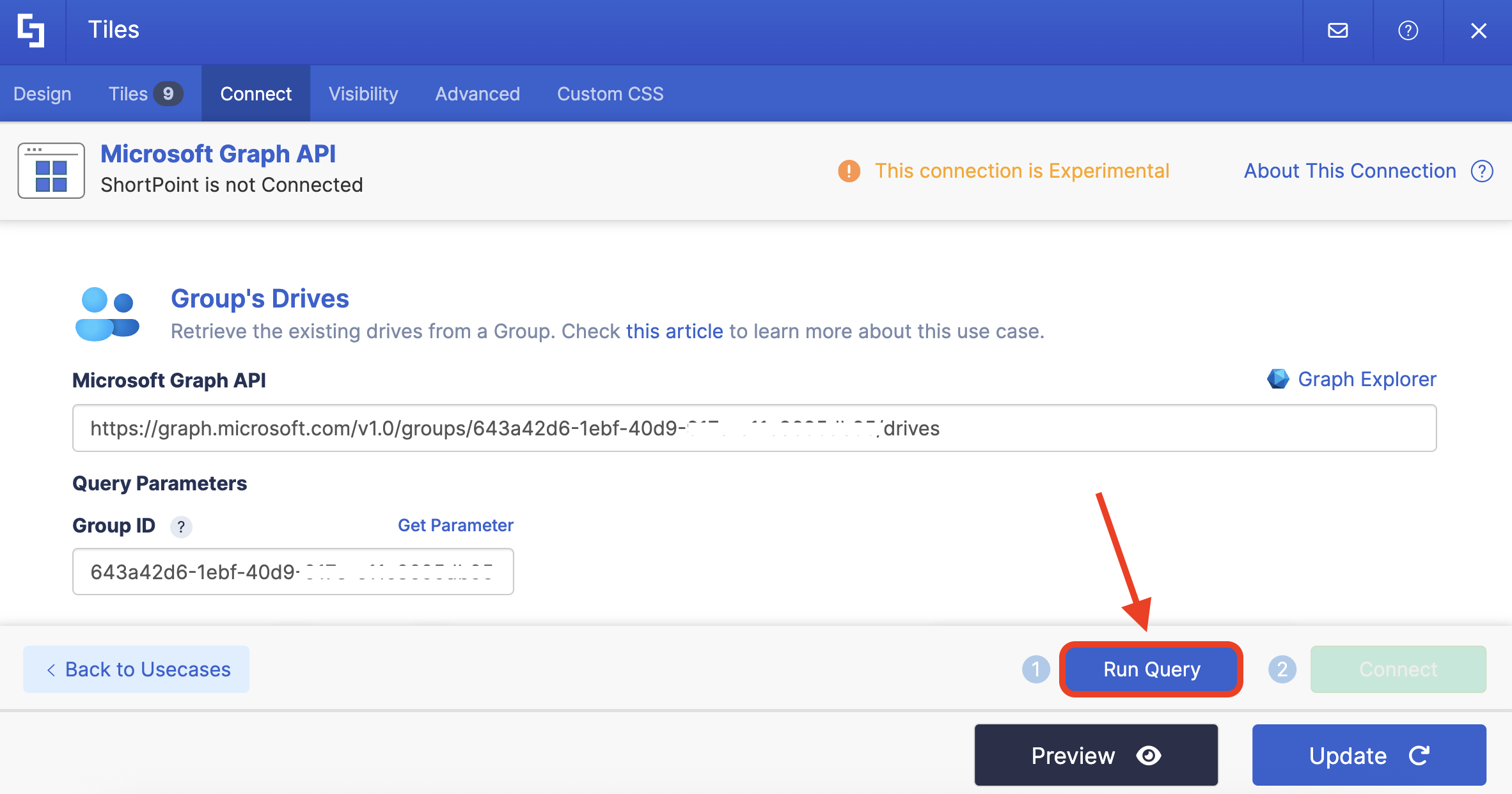
Click Run Query:
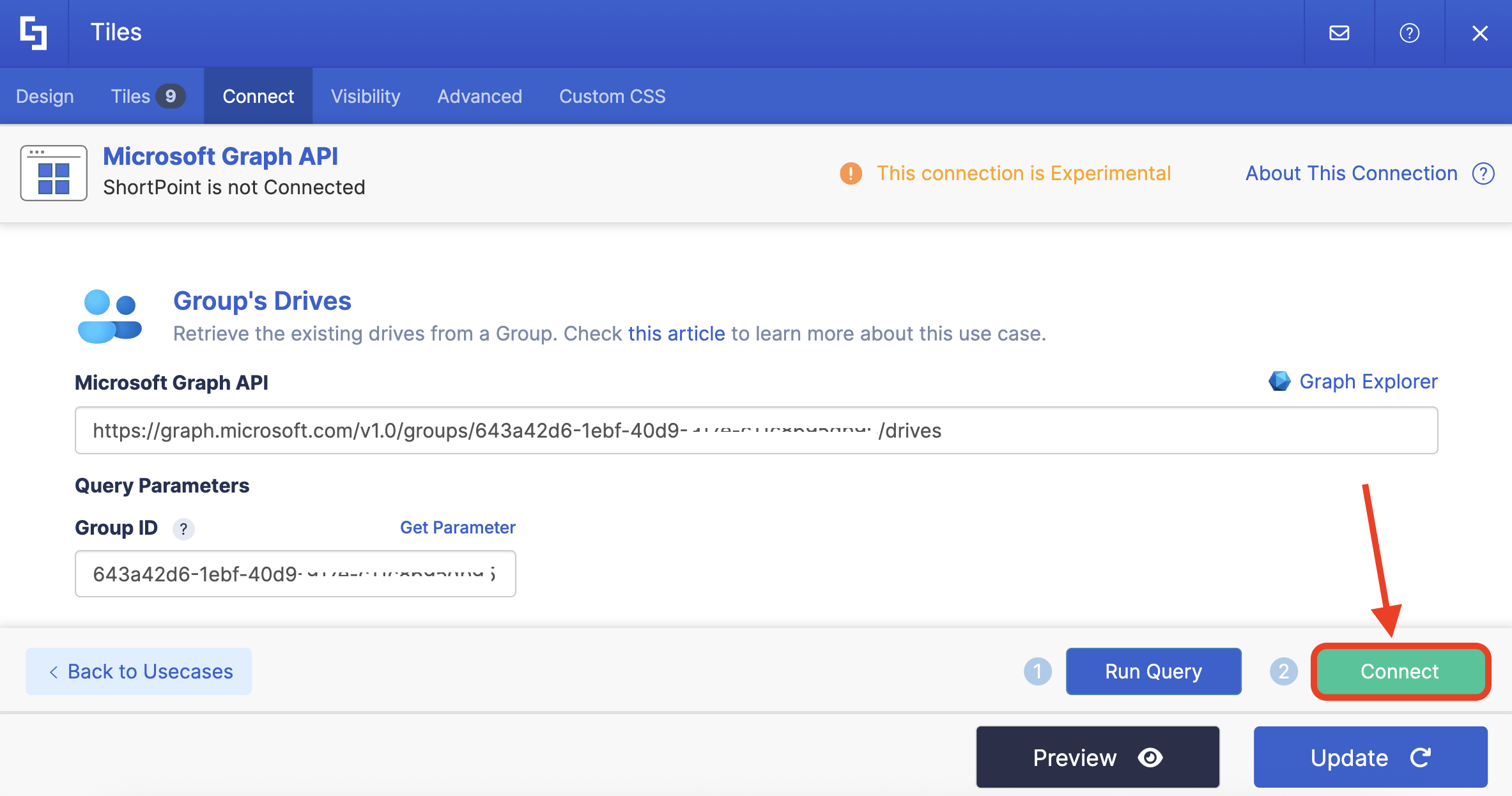
Select Connect:
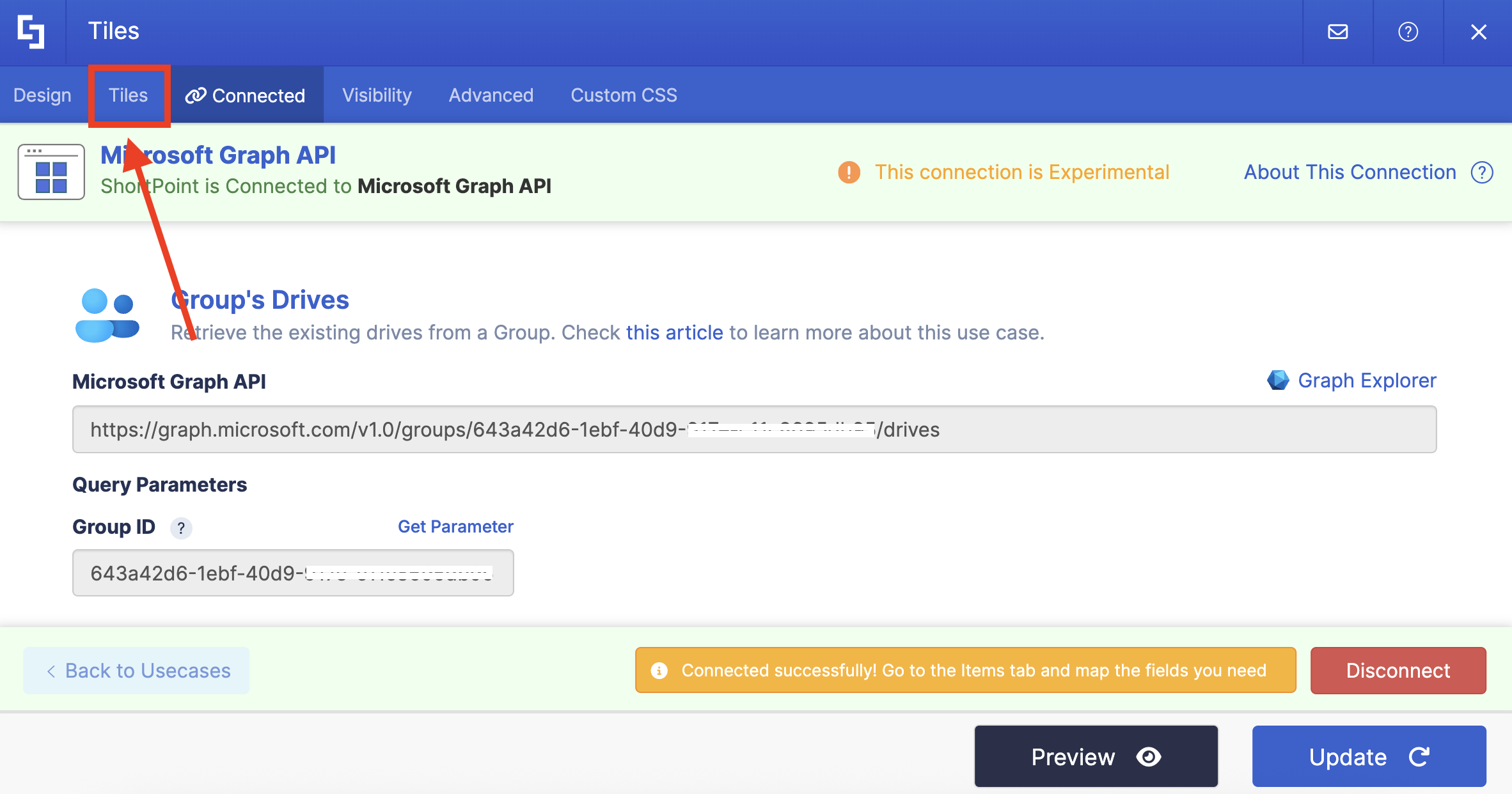
Step 8: Map Items
Go to the Tiles tab:
NOTEIf you’re using any other Design Element, item mapping can usually be done in the Items tab. But, since we’re using the Tiles Design Element, it’s located in the Tiles tab.
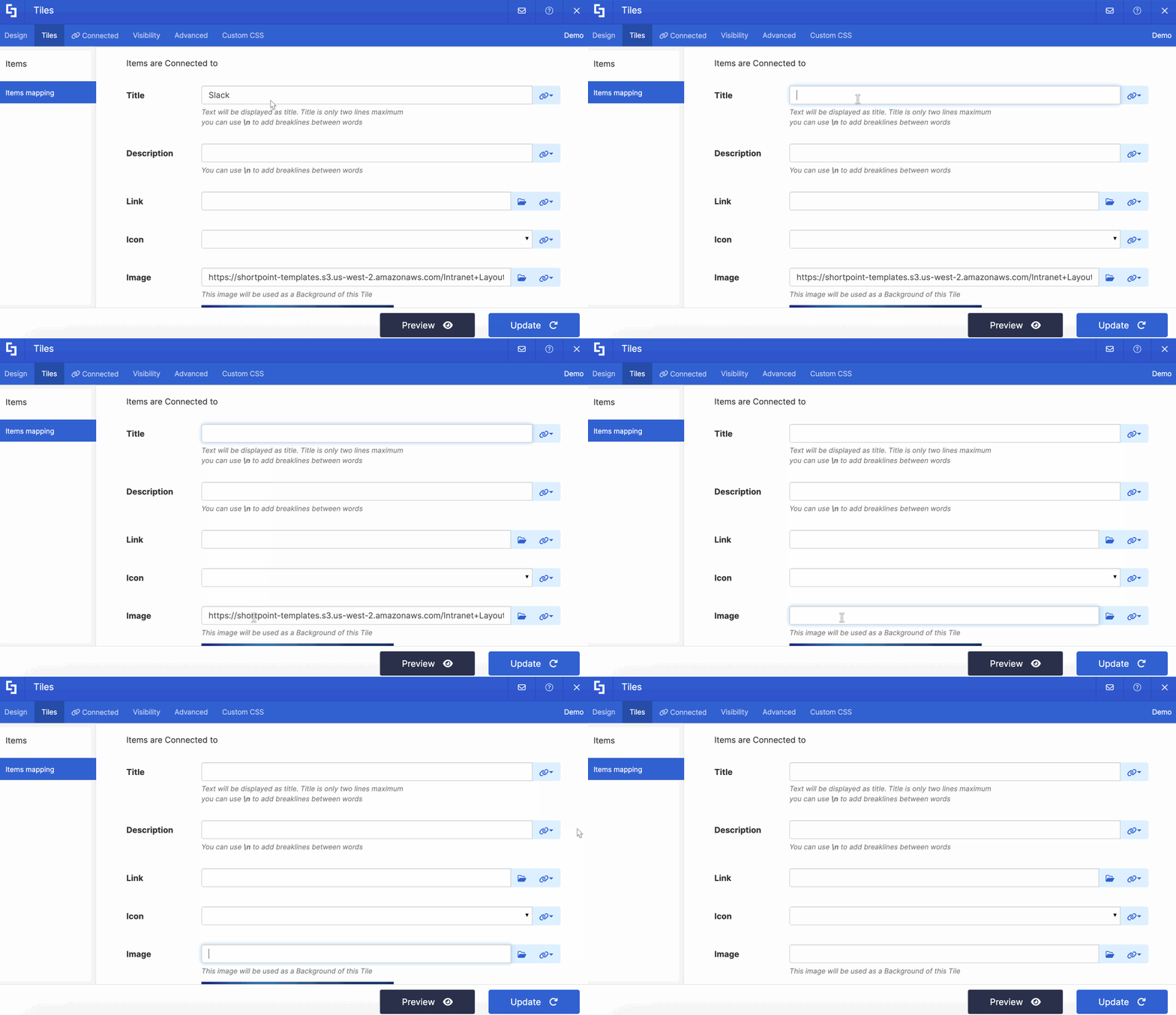
Delete default content:
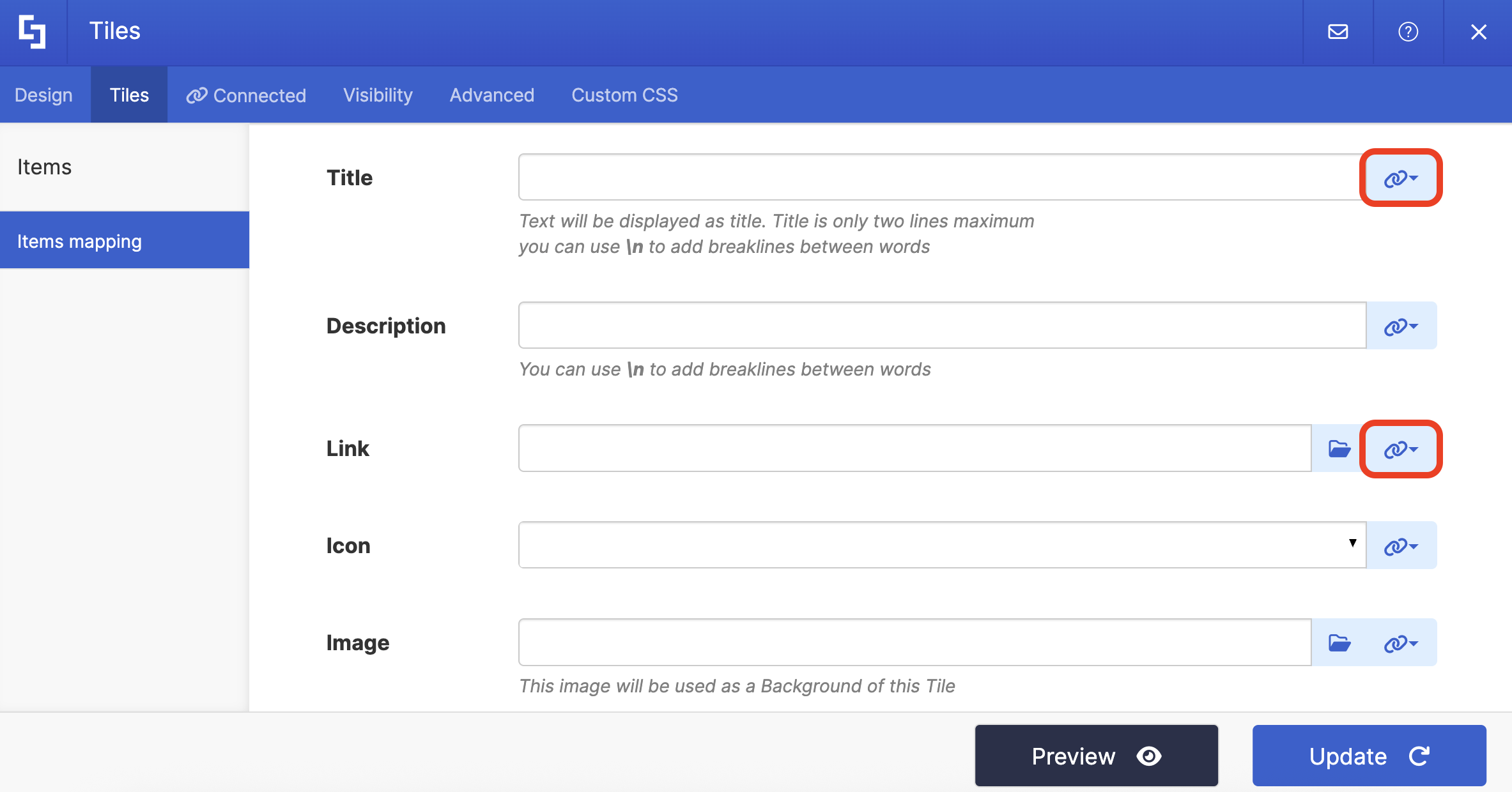
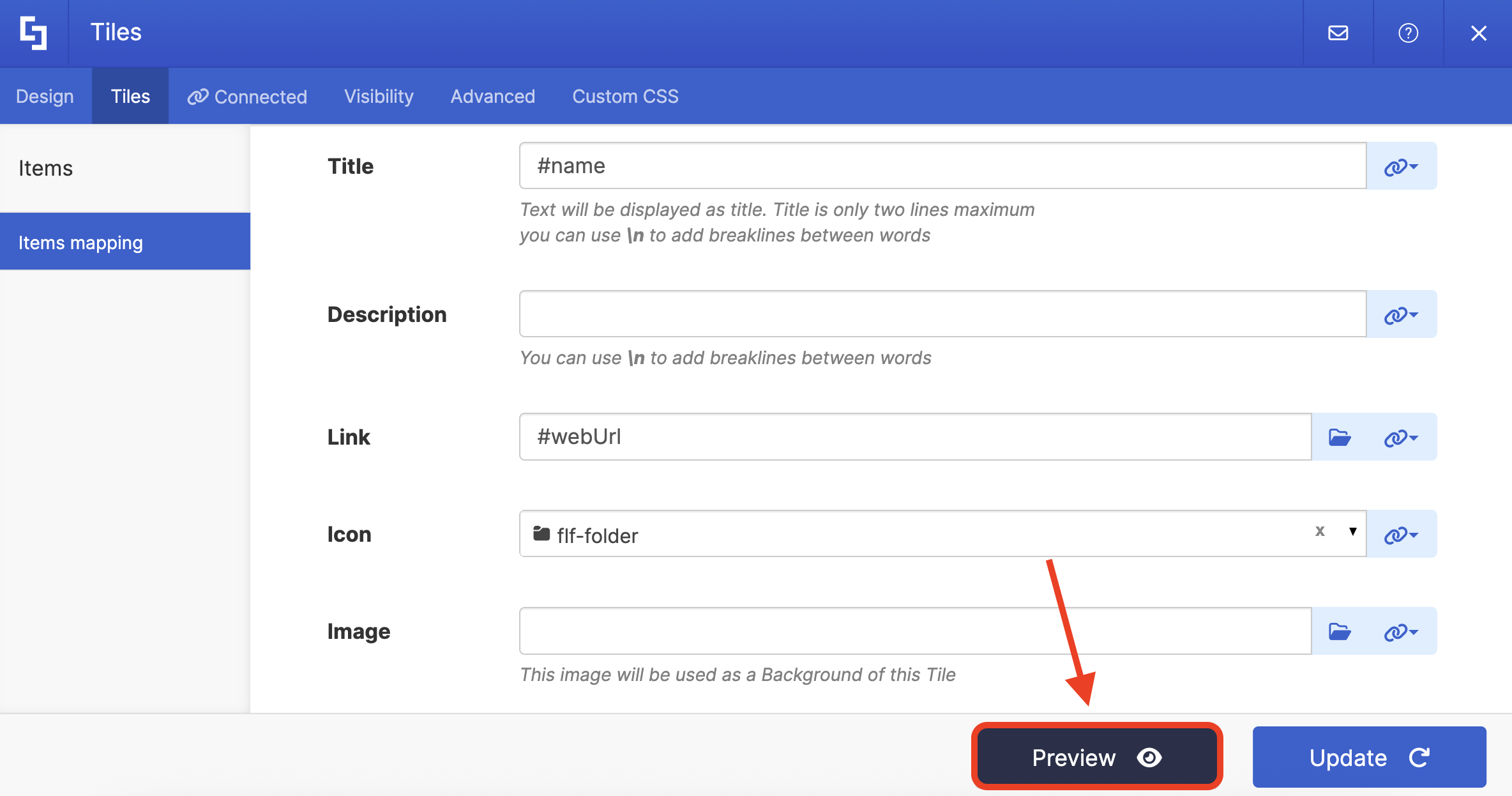
Use the link icon to map the properties you want to be displayed:
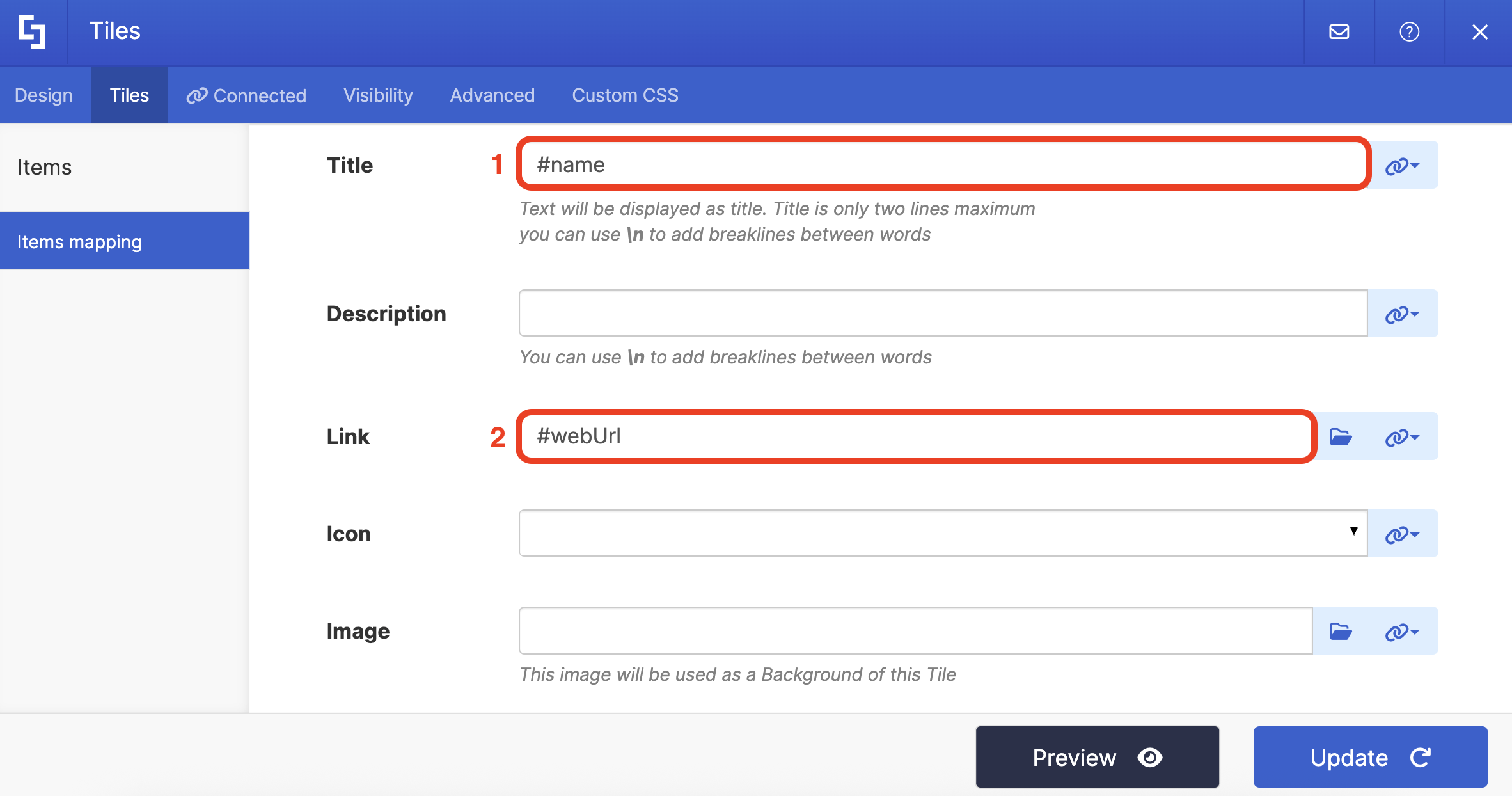
You can map any property you want. In our case, we used the following properties:
- #name in the Title field - shows the name of the drives as the titles.
- #webUrl - links to the actual drive.
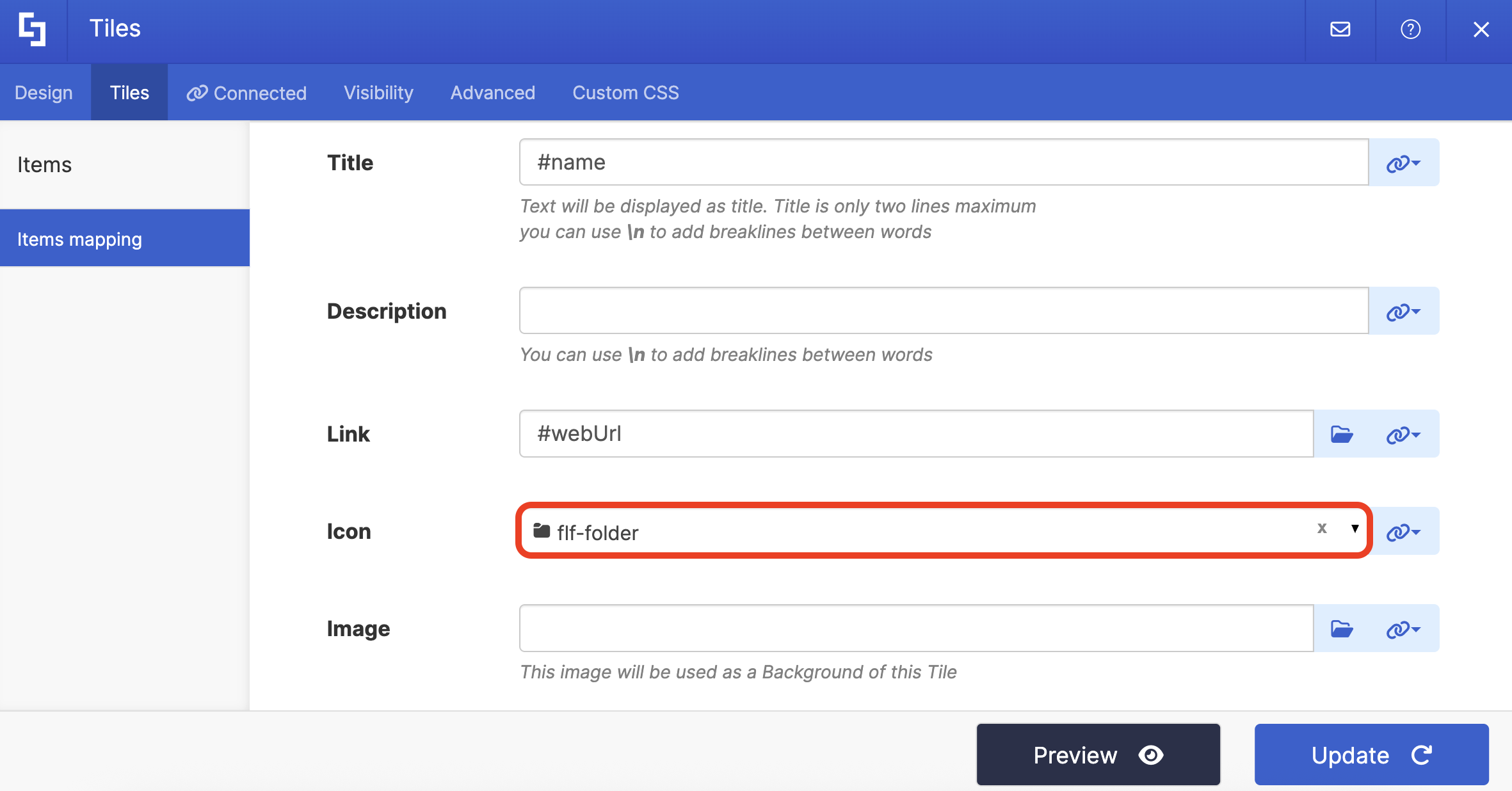
(Optional) If you’re using a Design Element that can add icons, choose the icon you want to be shown:
NOTECheck out Basic Tutorial: How to Establish Seamless SharePoint Connection with ShortPoint Connect to learn more about mapping properties.
Step 9: Save
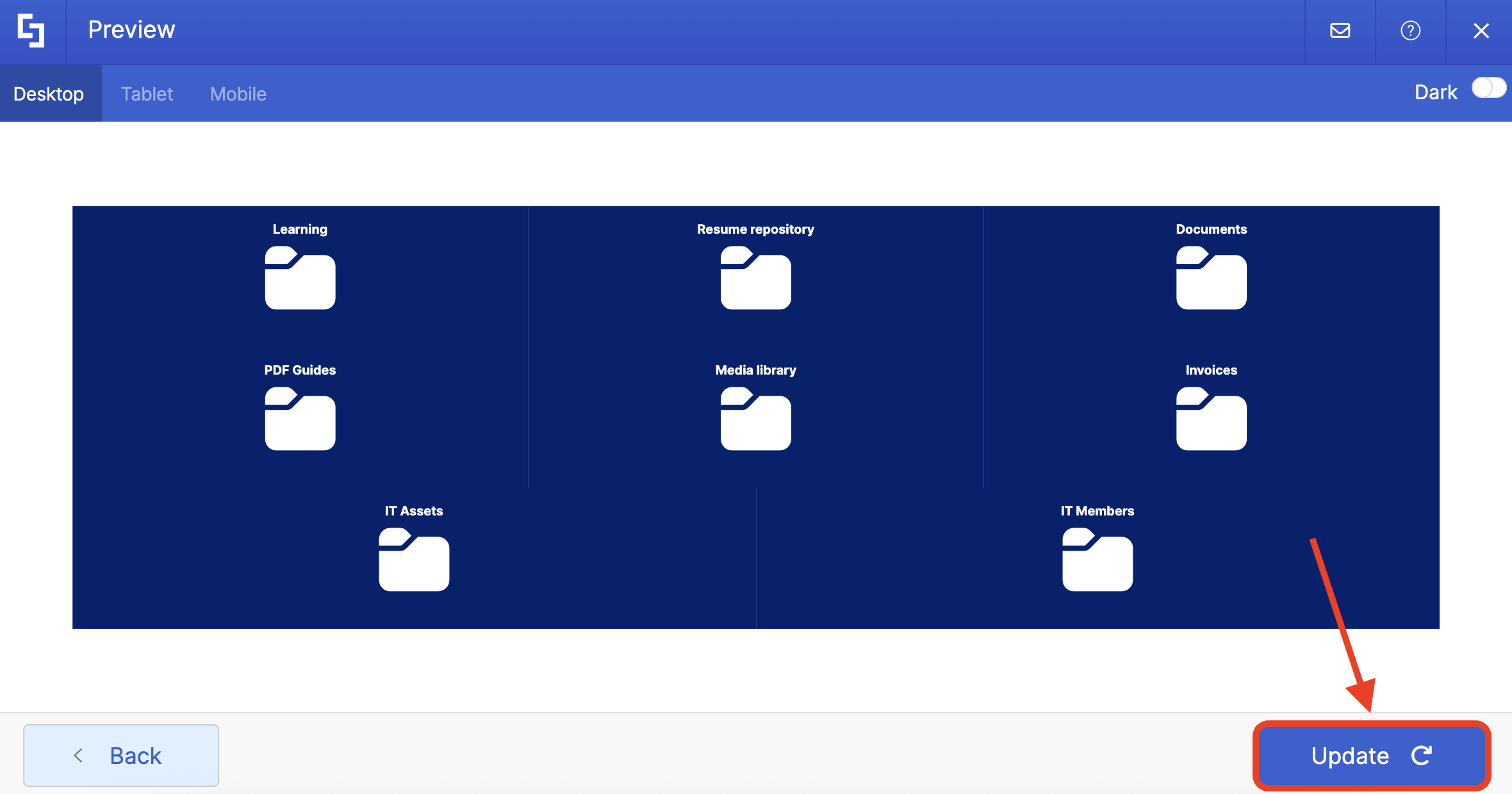
Click Preview to see how the Design Element will look:
Click Update to apply your changes:
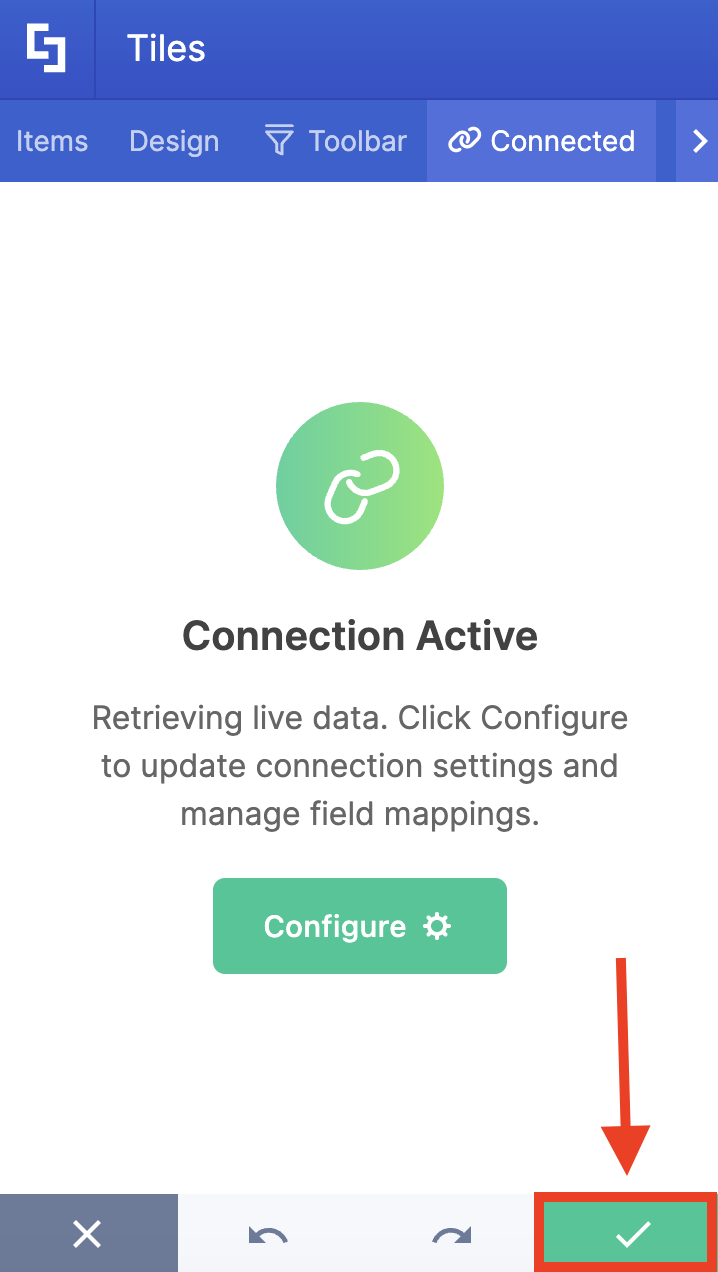
Click the green checkmark:
Select the eye icon to see your page in real time:
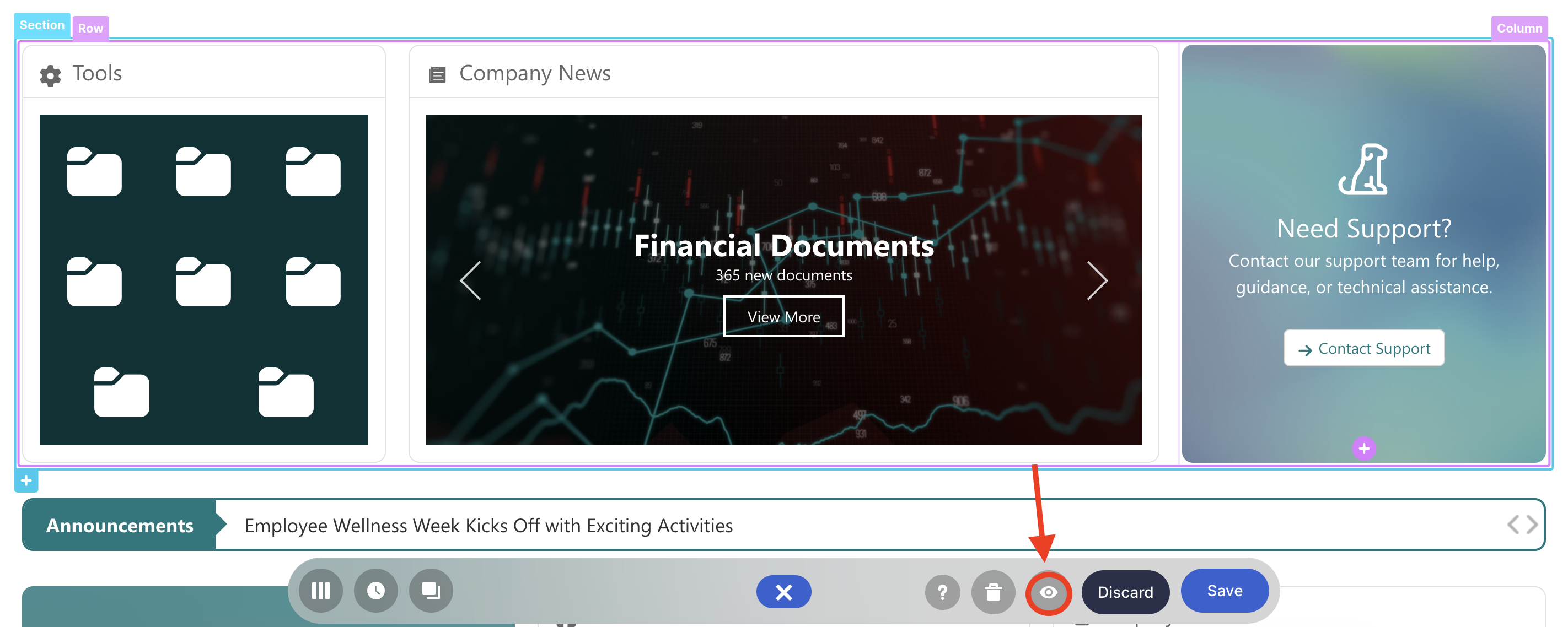
Once satisfied, click Save:
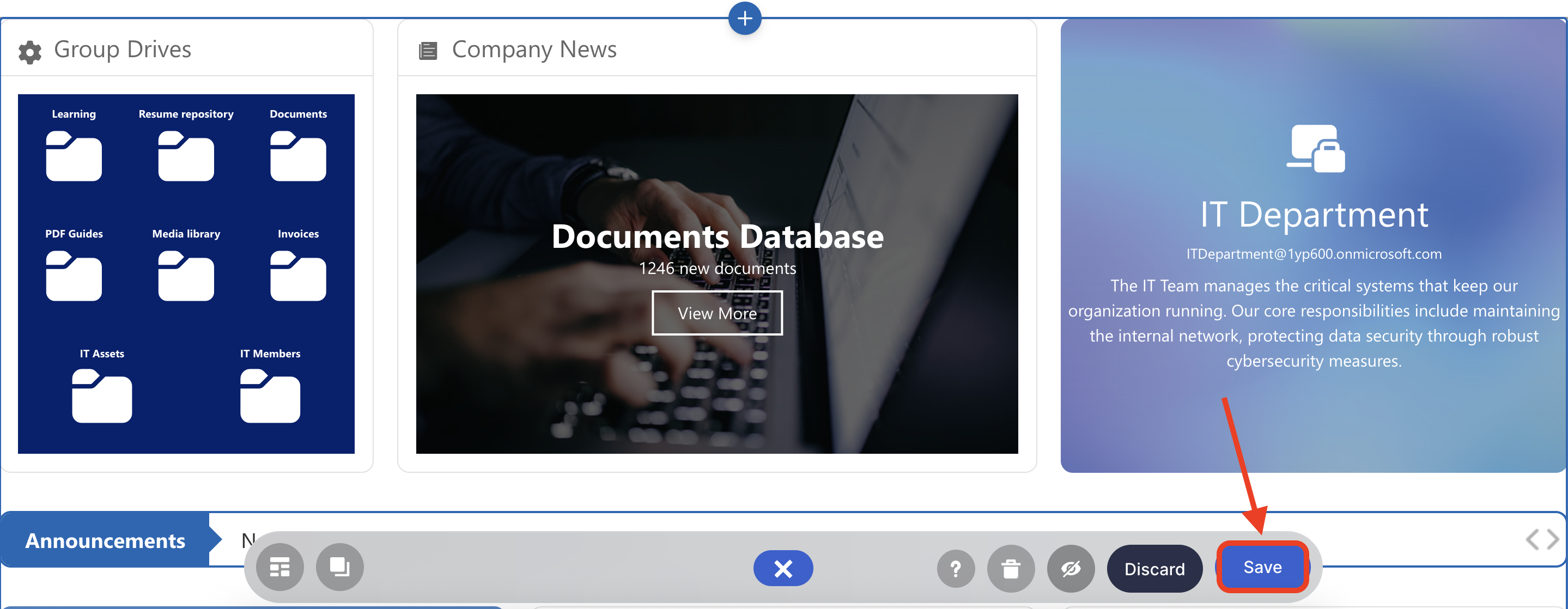
You're all set! Your page viewers now have quick access to the drives of a specific group, removing the need to switch between tabs.
Related articles:
- How to Enable Microsoft Graph Integration for MS Graph API Connections
- Microsoft Graph API: Supported and Non-Supported Endpoints
- Getting Started With Microsoft Graph API Use Cases