Try ShortPoint now
If you've ever wished you could connect to SharePoint content from different SharePoint sites across your Microsoft 365 organization, you're in luck. The ShortPoint Other Sites connection type makes this possible.
Let's dive into what this connection feature is all about and how it can transform the way you manage data across your SharePoint environment.
TABLE OF CONTENTS
- Prerequisites
- What is the Other Sites Connection Type?
- Interactive Tutorial
- Step-by-step Tutorial
- Other Sites Connection Features
- Practical Use Cases
- Create Dynamic Content with the Current Site Connection
- Frequently Asked Questions
- What's the difference between Other Sites and SharePoint Site URL connections?
- Do I need special permissions to use Other Sites?
- Will my connected content update automatically?
- Can I connect to multiple lists from different sites on the same page?
- Can I filter the data that's displayed?
- Can I connect to sites in different site collections?
- What types of content can I connect to?
- Will using Other Sites slow down my page?
Prerequisites
- You have the latest version of ShortPoint SPFx installed (version 8.7.2.0 and up) on your SharePoint environment.
- You are a ShortPoint Designer with an active license.
- You must have the ShortPoint Design Element you want to use to connect on your page.
- You must have access to the SharePoint List/ Library / Calendar you want to connect to.
What is the Other Sites Connection Type?
The Other Sites connection type is a powerful feature within ShortPoint Connect that allows you to connect to SharePoint Online data. It links your ShortPoint Design Elements to Microsoft SharePoint lists and libraries located in different sites within your SharePoint tenancy. Think of it as a bridge that lets you pull content from anywhere in your organization and display it wherever you need to.
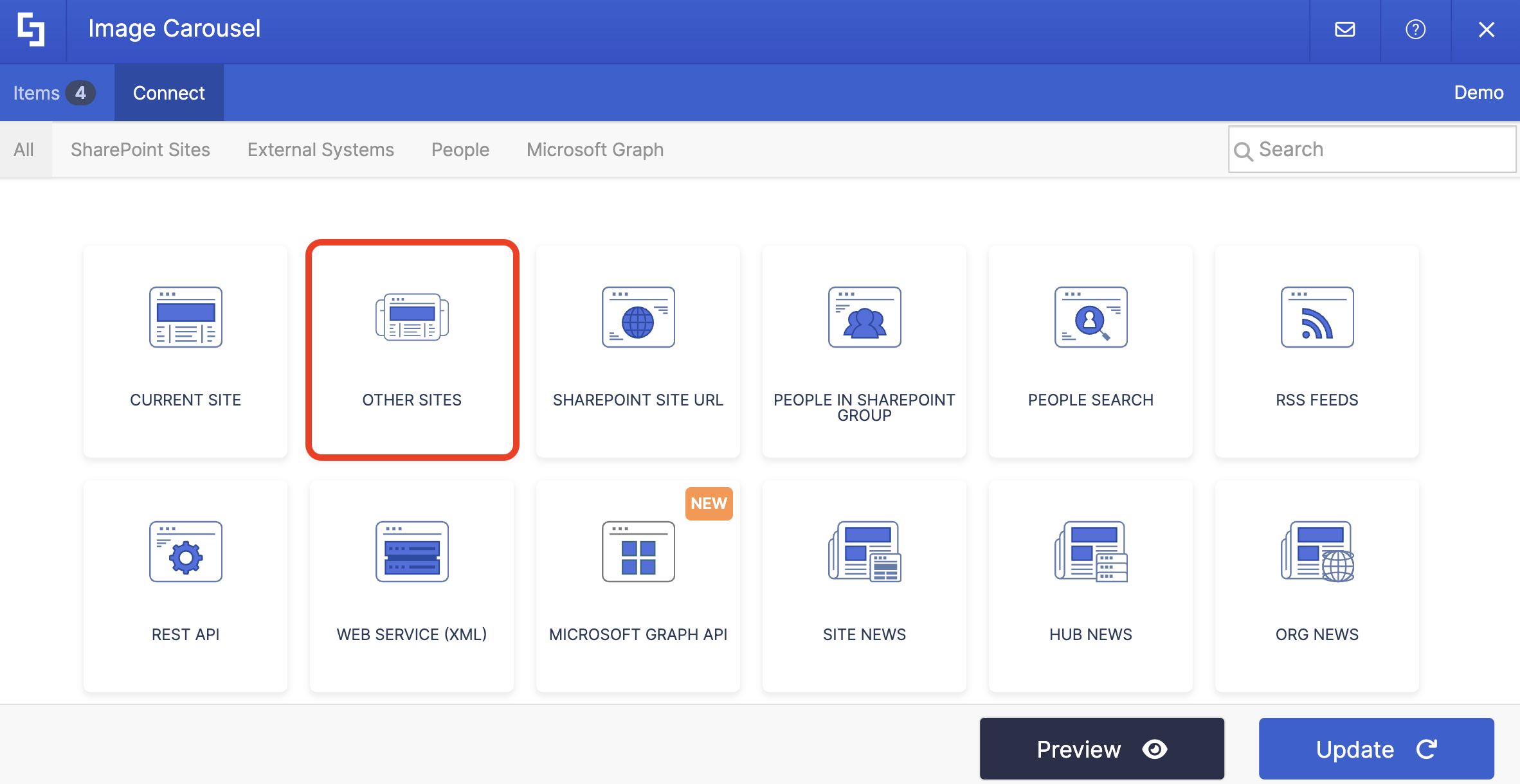
Unlike the Current Site connection (which only accesses content from your current location) or the SharePoint Site URL connection (which requires you to paste specific URLs), the Other Sites connection provides a user-friendly dropdown interface. This makes it easy to create connections by browsing through your site collections, selecting the site you need, and choosing the specific SharePoint library or list you want to connect to. All without fumbling around for URLs!
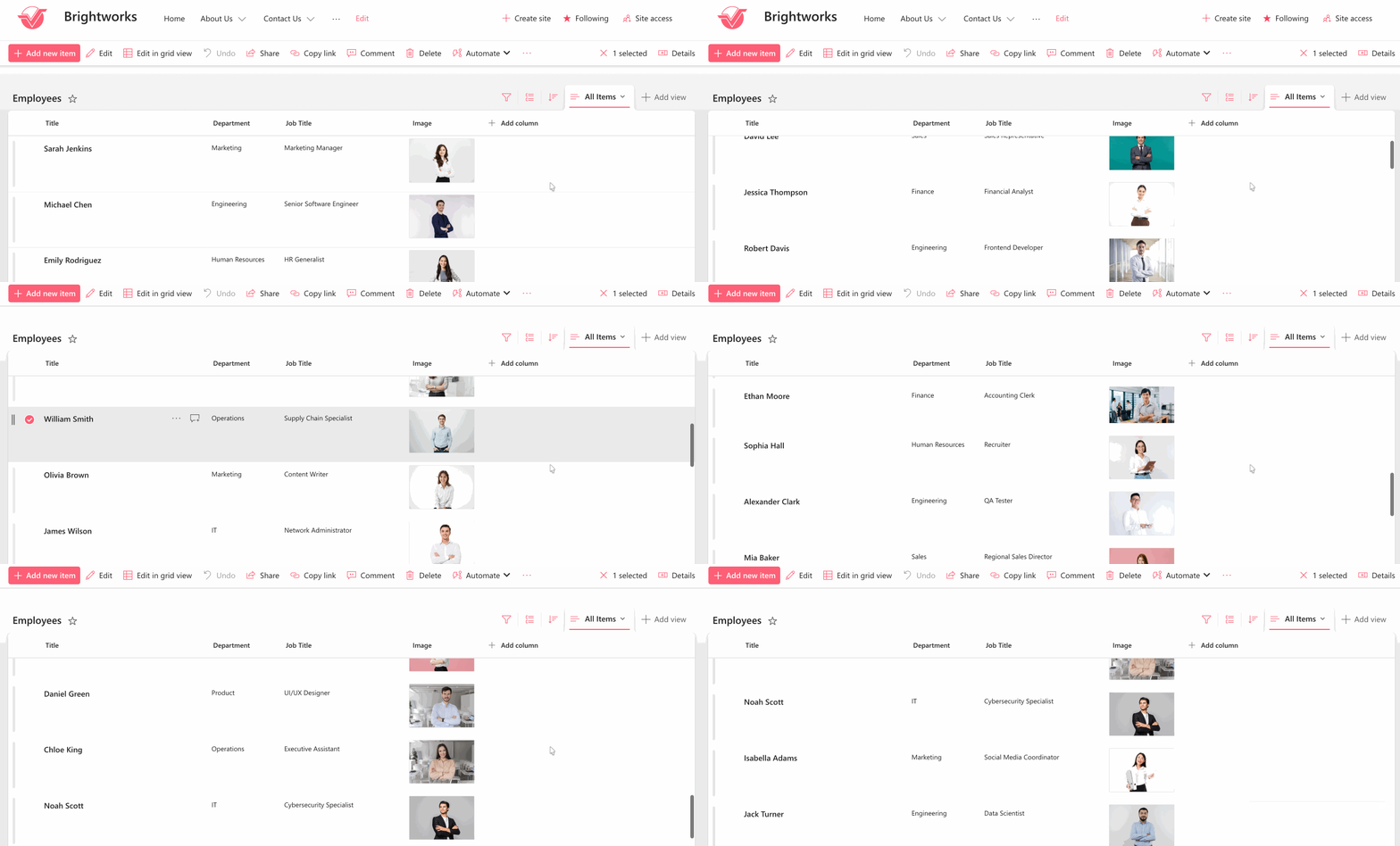
Want to see it in action? Here’s a SharePoint List we’ve created in another SharePoint site:
The Other Sites connection was able to pull all the stored data from that SharePoint List and display it in the SharePoint page we’re using. Amazing, right?! Not only that, you get to showcase your information beautifully.
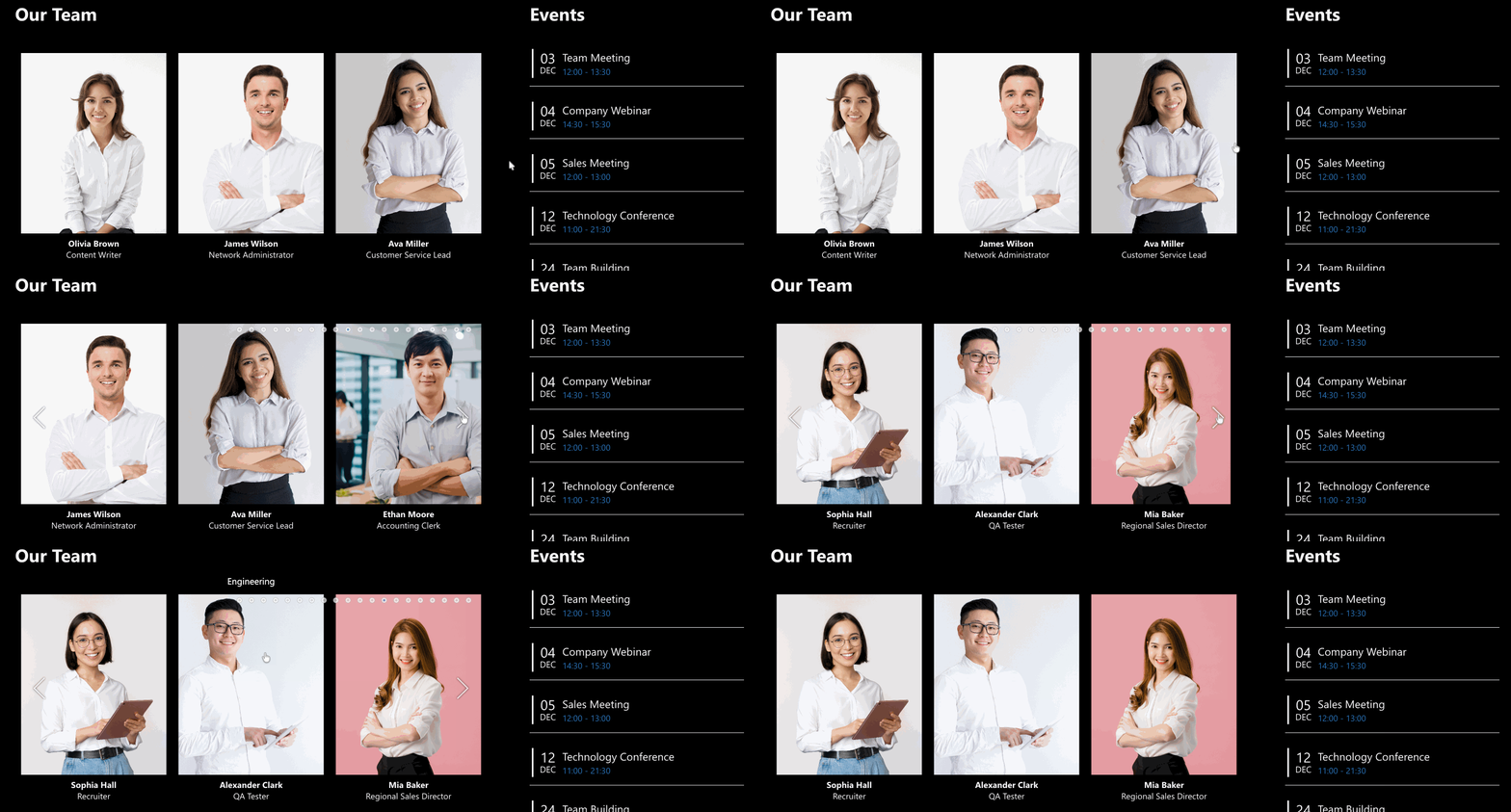
And once you establish the connection and map your fields, your content updates automatically whenever the source list or library changes. No manual updates required. For example, when we add an employee to our list:
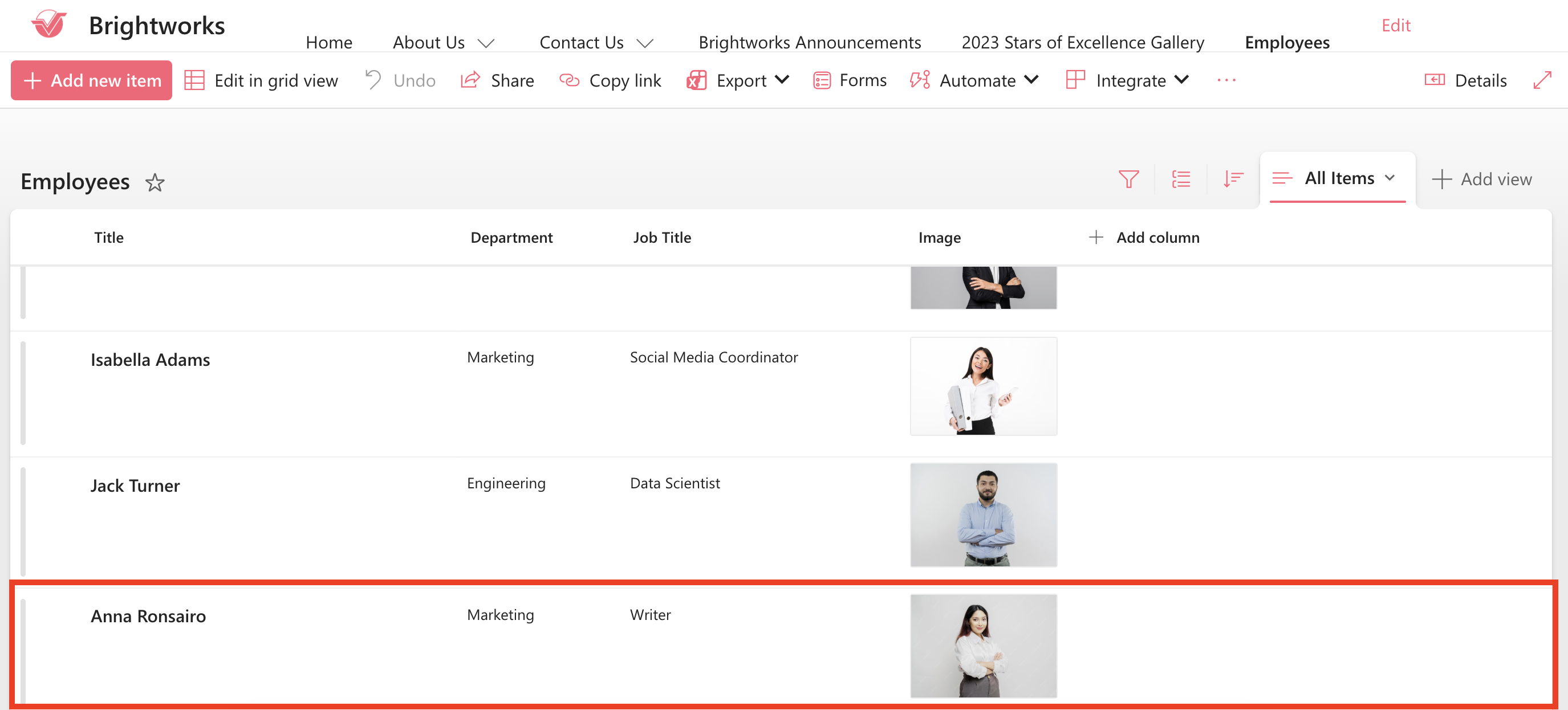
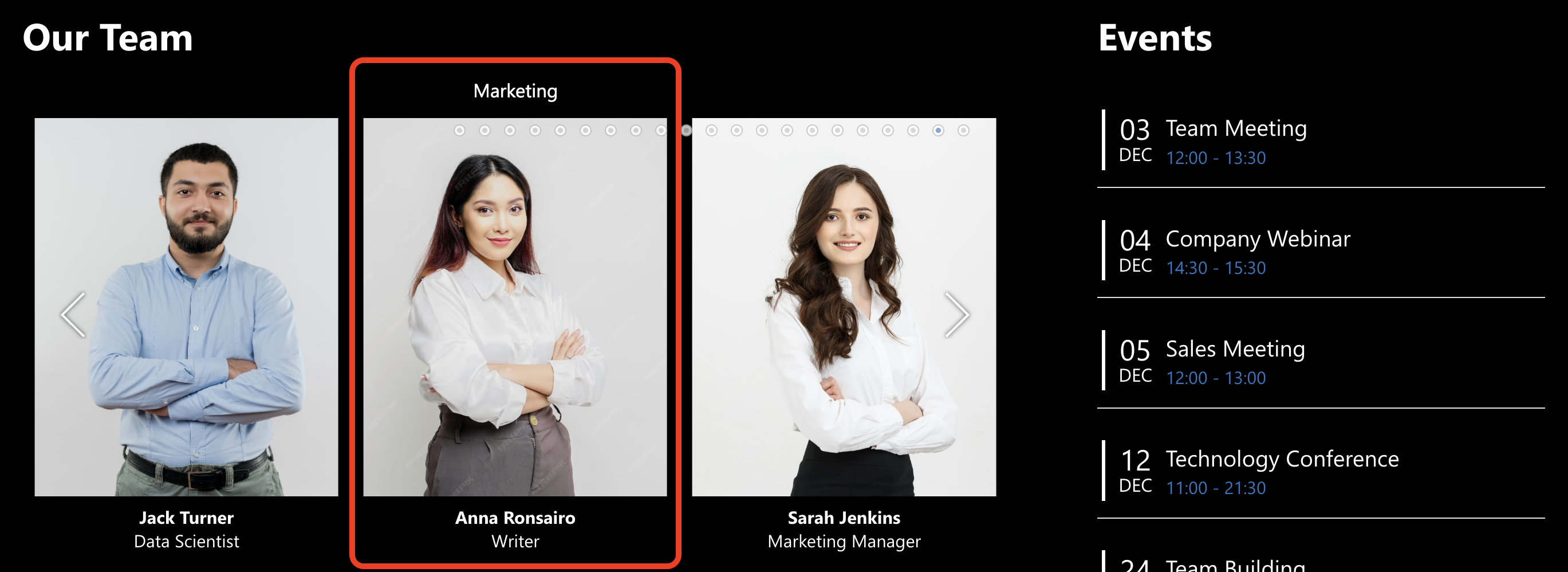
The connected Design Element will automatically be updated too:
Interactive Tutorial
Click Get Started to learn how to use the Other Sites connection type and connect to SharePoint data across different SharePoint sites within your Microsoft 365 organization:
NOTETo learn more about the Connect Feature and Items Mapping, check out Basic Tutorial: How to Establish Seamless SharePoint Connection with ShortPoint Connect.
Step-by-step Tutorial
Learn how to use the Other Sites connection type to connect to SharePoint data from another site within your SharePoint environment.
Step 1: Edit the ShortPoint web part
- Go to the SharePoint page you want to use and click Edit:

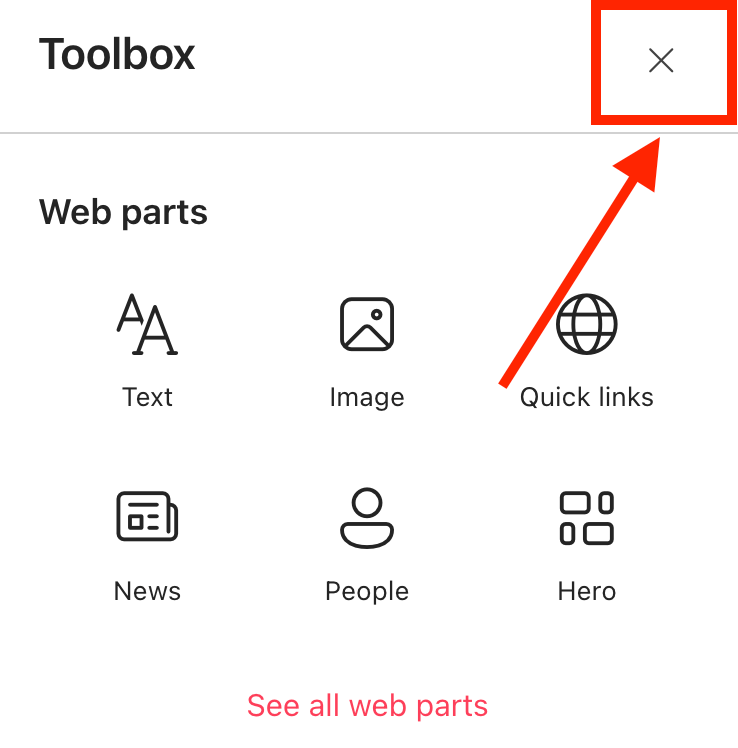
- Close the Toolbox:
- Edit the ShortPoint web part:

Step 2: Edit the Design Element
NOTEBefore proceeding, you must already have the Design Element you want to use to connect on your SharePoint page. You can use any Design Element you prefer, but we recommend using Design Elements that allow listing of multiple items, including Simple List, Image List, Icon List, and so much more. For this guide, we'll use Image Carousel.
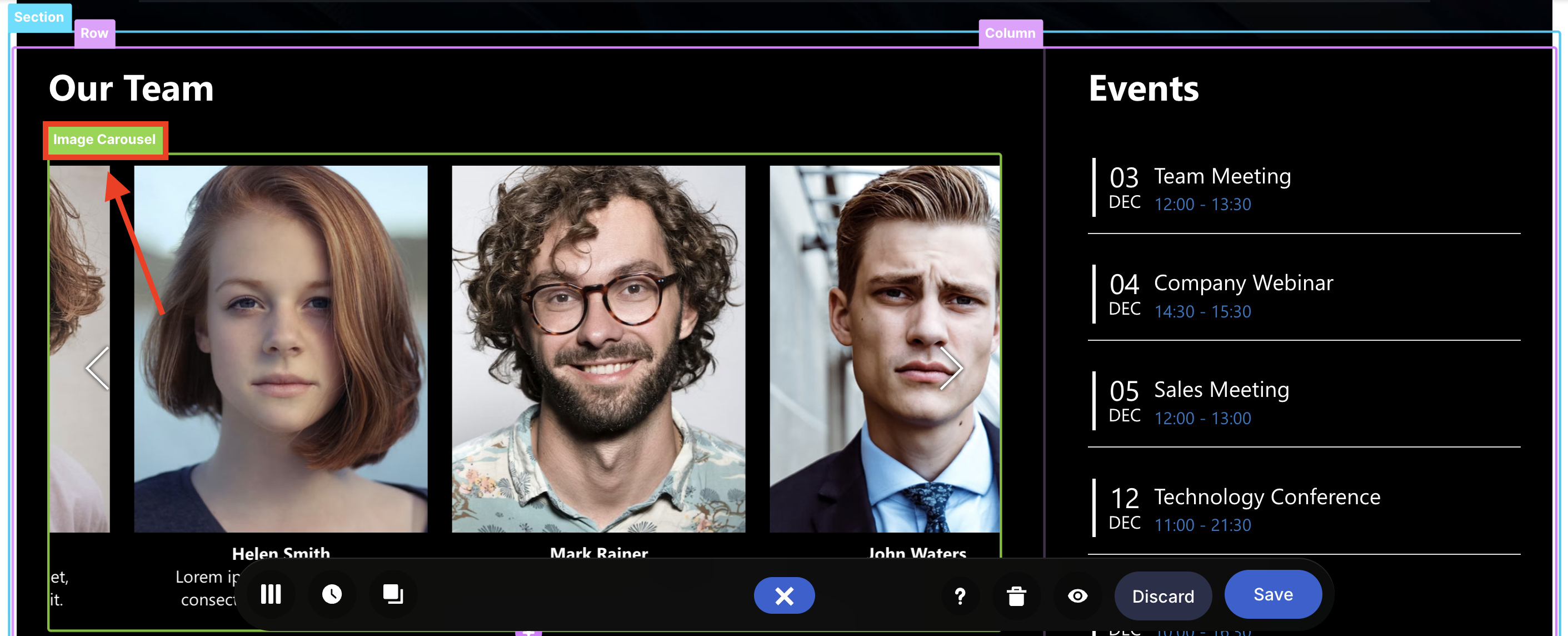
- Click the EasyPass tag of the Design Element you want to use to connect:
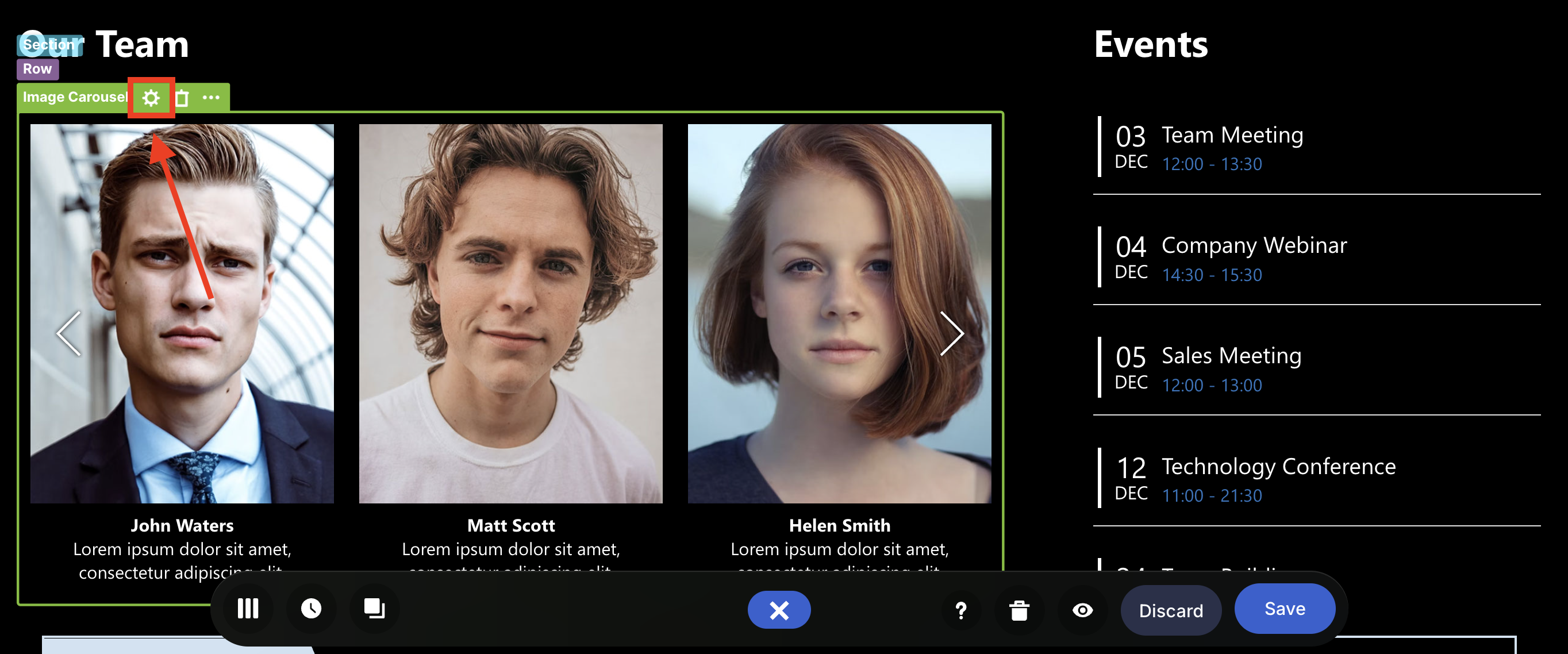
- Select the cogwheel icon:
Step 3: Connect using the Other Sites connection type
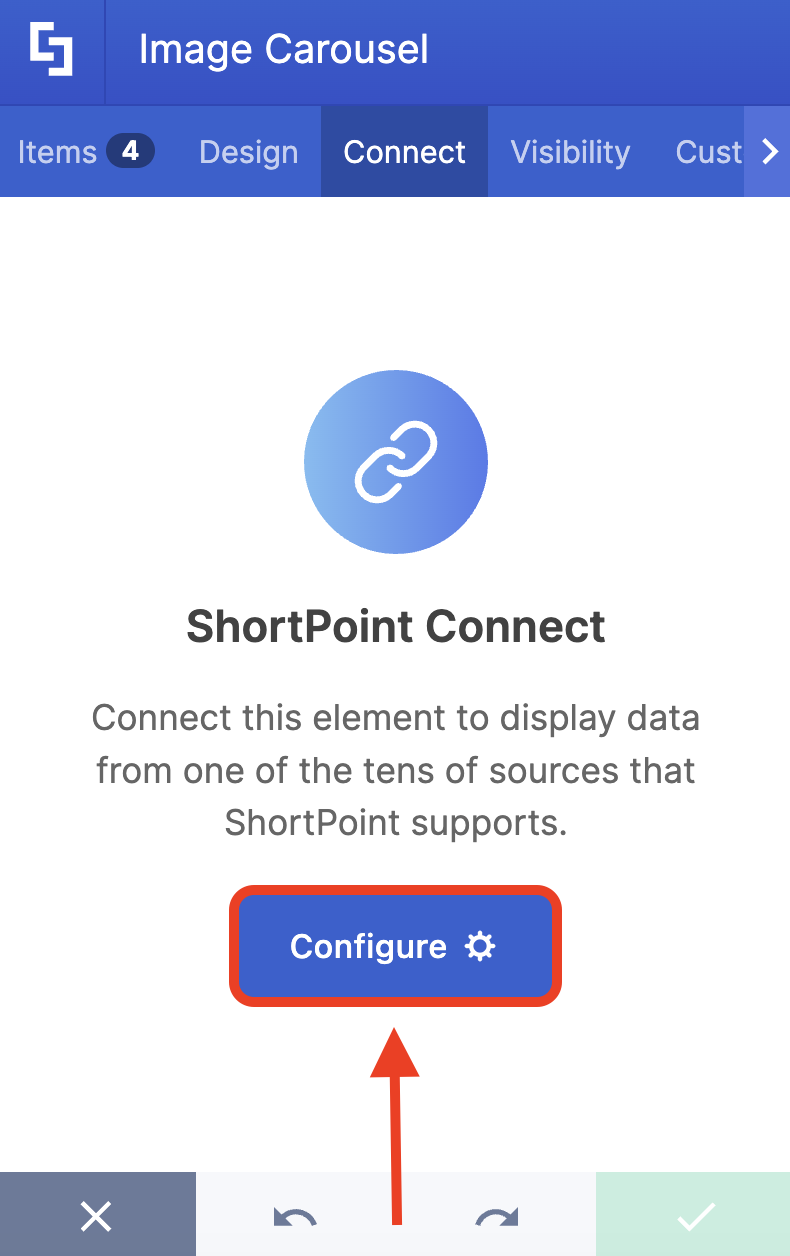
- Go to the Connect tab.
- Click Configure:
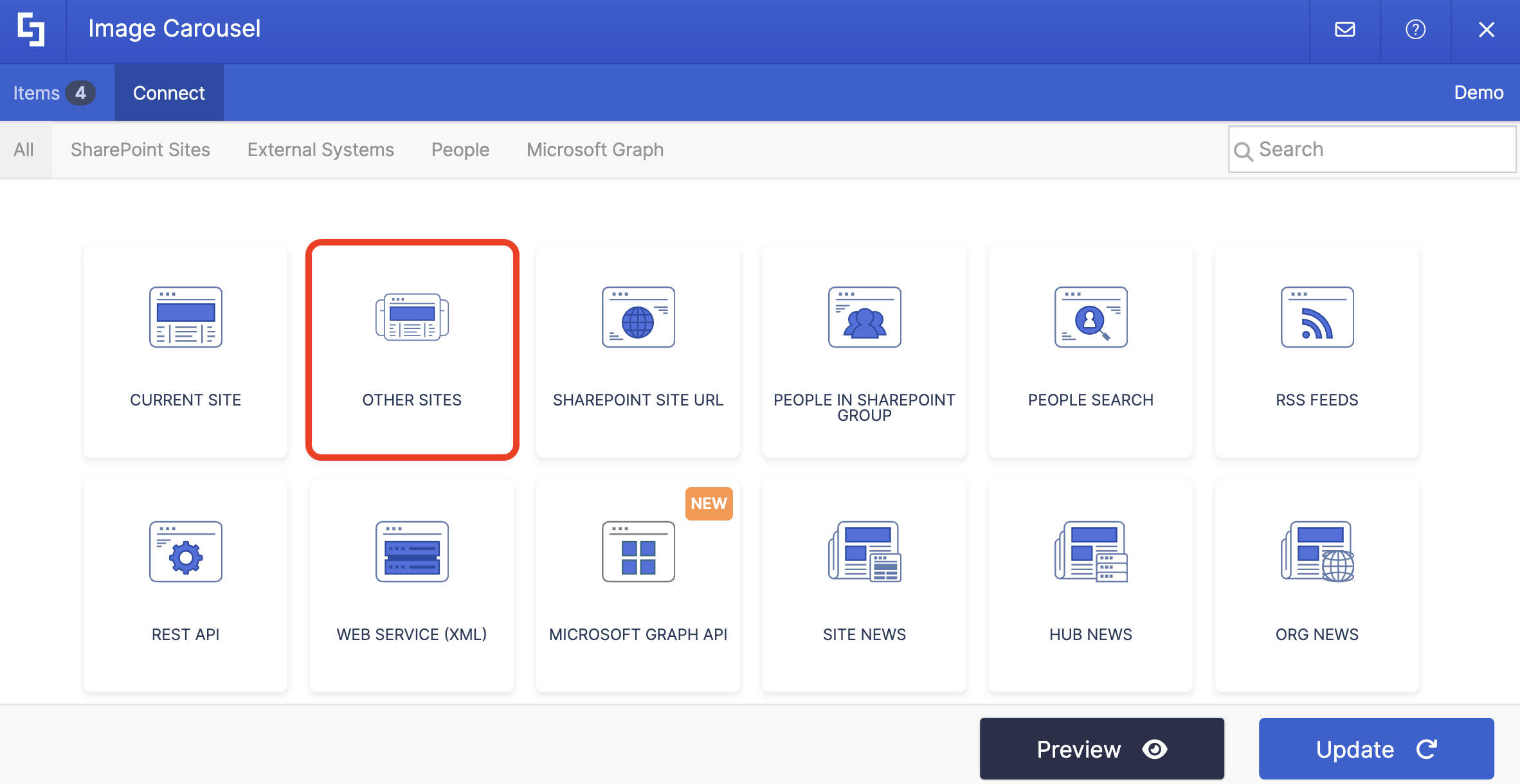
- Select Other Sites.
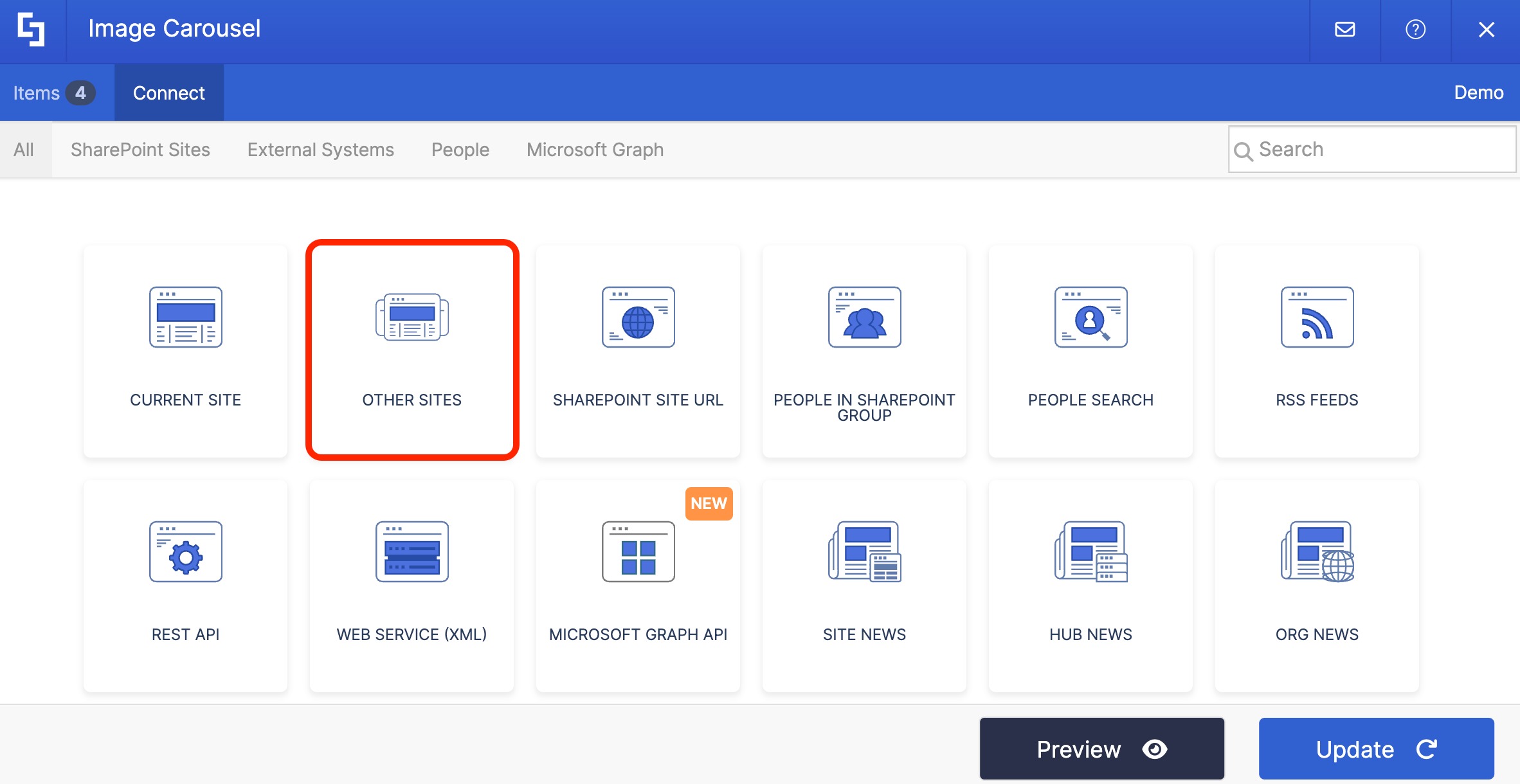
- Find the name of the Site Collection where your SharePoint List, Library, or SharePoint calendar is located and select it.
- Look for your Site name.
- Click the List / Library drop-down and look for the name of your SharePoint List / Library / Calendar.
- If you have created a custom view, click the View drop-down to select your preferred view.
- (Optional) In the Items Limit field, write the maximum number of items you want to be displayed on your connected Design Element.
- Then, click Connect to establish the connection.
NOTEGo to Other Sites Connection Features to learn more about the options you can modify.
Step 4: Map Items to display
- Go to the Items tab.
- Delete all default content:
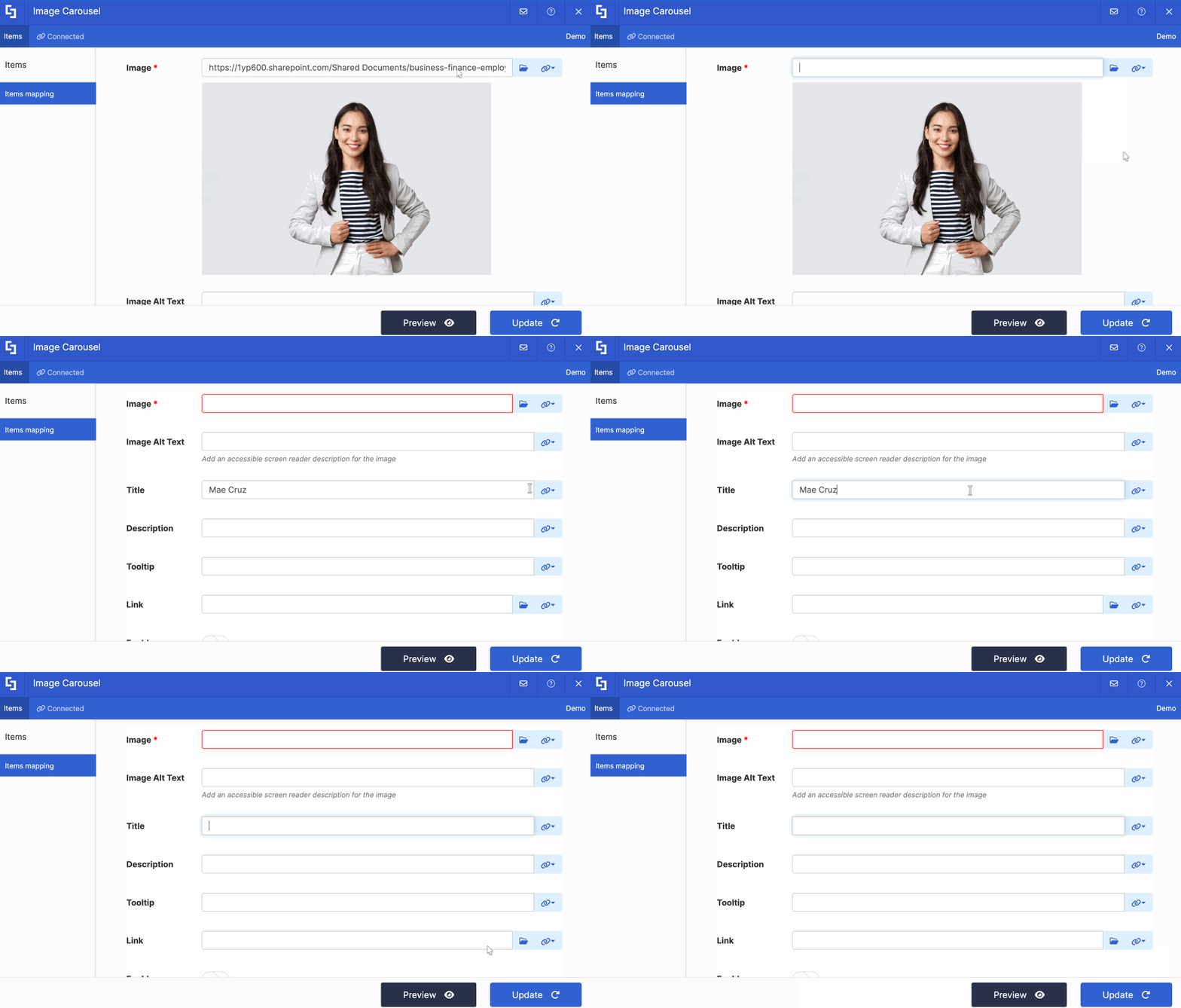
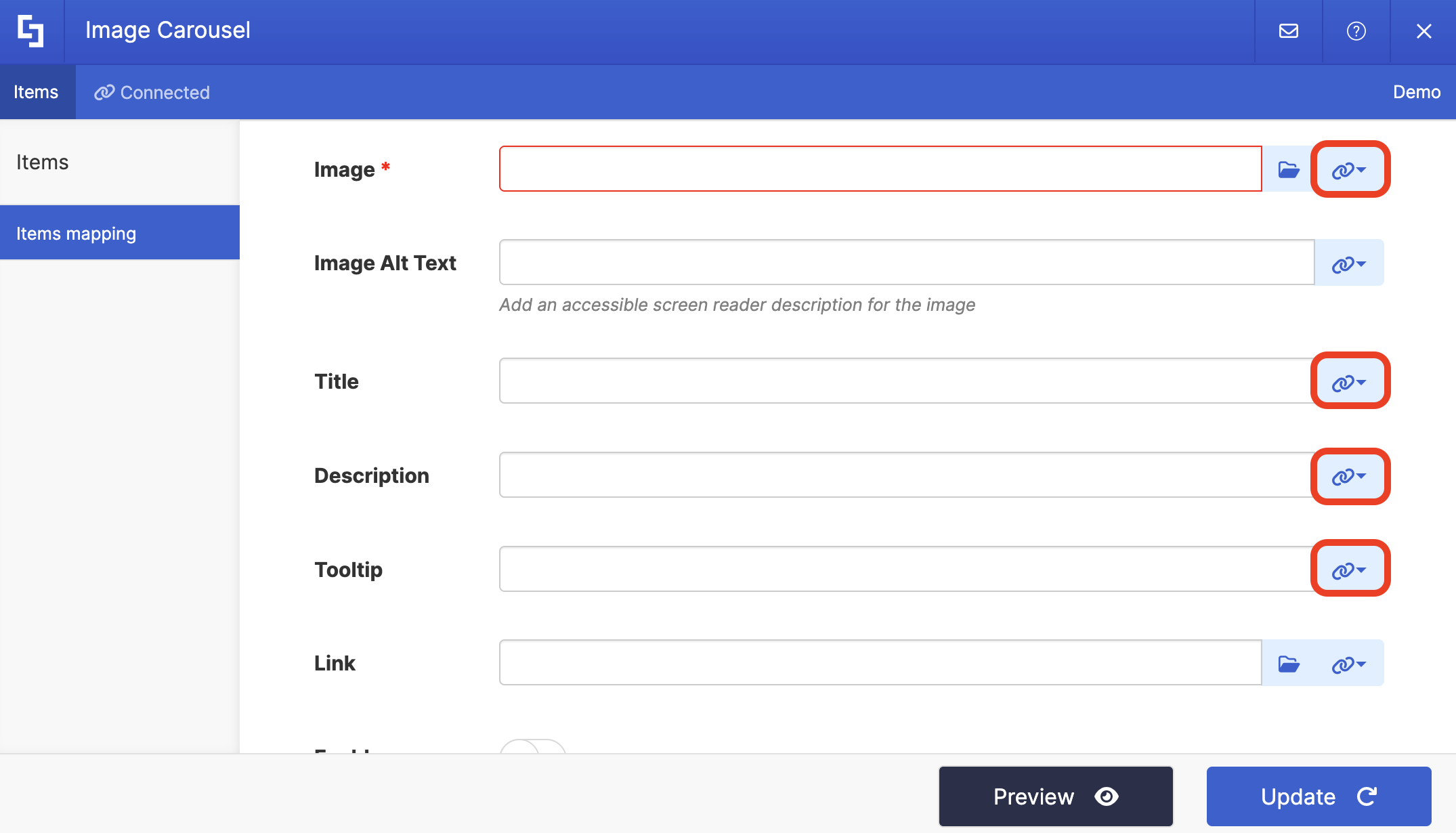
- Click the link icon to choose the properties you want to display. You can map any property you prefer. Just take note that the properties you can map depend on the information in your SharePoint List / Library / Calendar.
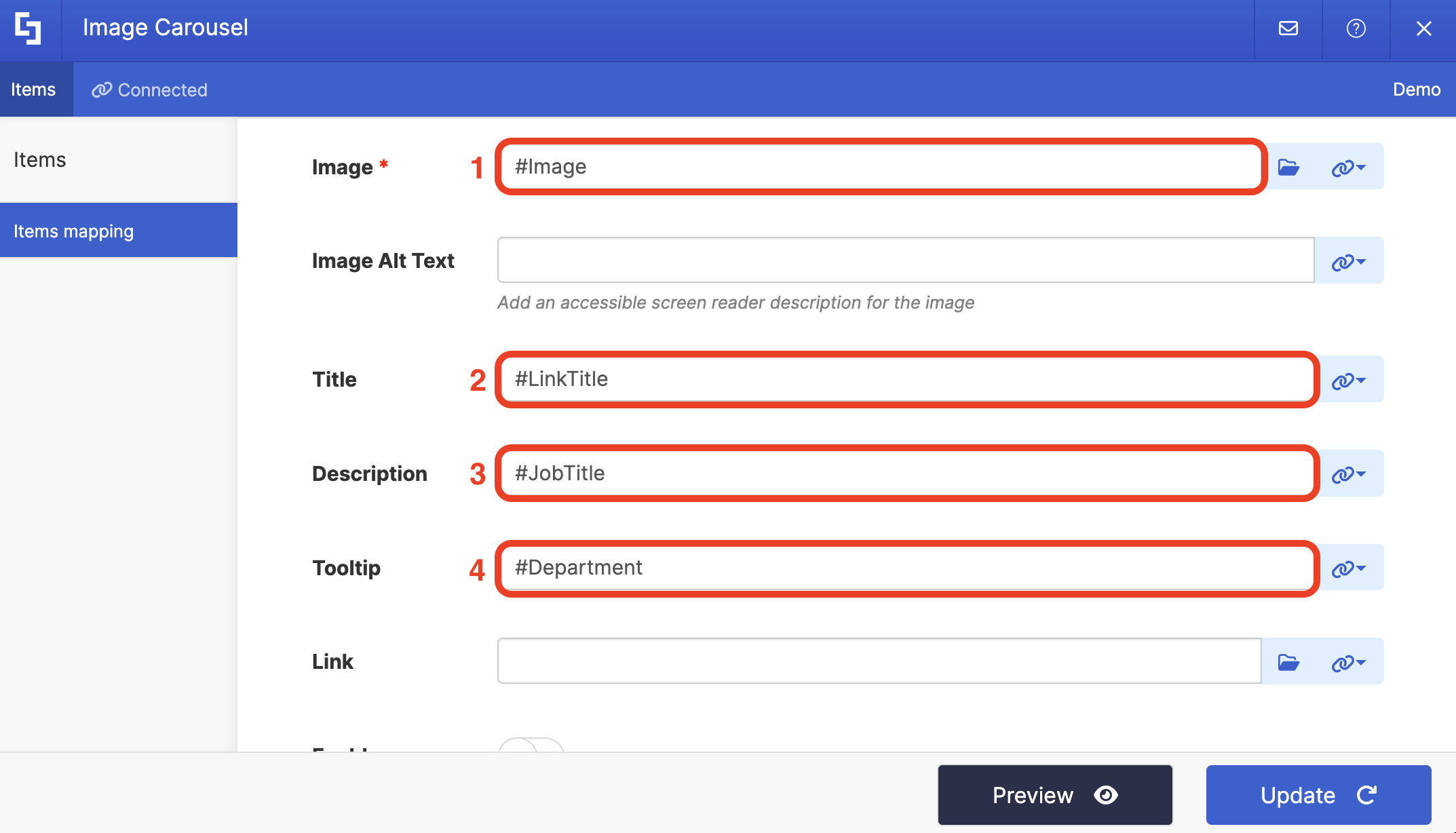
- Here’s an example of our mapped properties:
- #Image - shows the information inside our SharePoint List’s Image column.
- #LinkTitle - shows the information inside our SharePoint List’s Title column.
- #JobTitle - shows the information inside our SharePoint List’s Job Title column.
- #Department - shows the information inside our SharePoint List’s Department column.
NOTETo learn more about the Connect Feature and Items Mapping, check out Basic Tutorial: How to Establish Seamless SharePoint Connection with ShortPoint Connect.
Step 5: Update and Save
- Click Preview to see how the Design Element will look on your page.
- Once satisfied, click Update.
- Select the green checkmark.
- Then, click the eye icon to see how your page will look in real-time:

- Save your changes:

Congratulations! You can now connect lists, libraries, or calendars from another site and display them on your current page.
Other Sites Connection Features
To make the most out of the Other Sites Connection, you need to know all it has to offer. We’ve listed its key features below:
 | Site Collection | allows you to look for the name of the Site Collection where your SharePoint List, Document Library, or SharePoint calendar is located. |
 | Site | allows you to select the name of the SharePoint site where your SharePoint List, Document Library, or SharePoint calendar is located. |
 | List / Library | allows you to look for the name of the SharePoint List, Document Library, or SharePoint calendar you want to connect to. |
 | View | allows you to choose the name of the custom view you created for your SharePoint List, Document Library, or SharePoint calendar. |
 | Items Limit | allows you to set the maximum number of items to display. If this is left blank or is set to 0, all items will be shown. |
 | Convert HTML to Plain Text | when enabled, this option will convert all the HTML data to plain text. |
ADVANCED SETTINGS
 | Enable Advanced Settings | when enabled, advanced settings will be displayed. |
 | Custom headers | allows you to append custom header parameters using JavaScript. Learn more about the Custom Headers function. |
 | Change Parameters | allows you to pass parameters to the URL with JavaScript. Learn more about the Change Parameters function. |
 | Change Path | allows you to modify the Service URL Path using JavaScript. Learn more about the Change Path function. |
 | Map Results | If your API doesn't return an array of result items (which ShortPoint expects), you can use this function to transform the data into the proper format for ShortPoint. Learn more about the Map Results function. |
PERFORMANCE AND CACHING
 | Enable Partial Loading | This feature comes enabled by default. It allows partial loading to activate automatically when the connection returns more than 20 results. Additional results will load as the user scrolls. Learn more about the Partial Loading function. |
 | Cache Options | allows you to choose from 3 caching options. Learn more about these caching options and how to improve ShortPoint performance on your SharePoint sites.
|
Practical Use Cases
So, when would you actually use the Other Sites connection? Here are some real-world tasks where this SharePoint connection feature really shines:
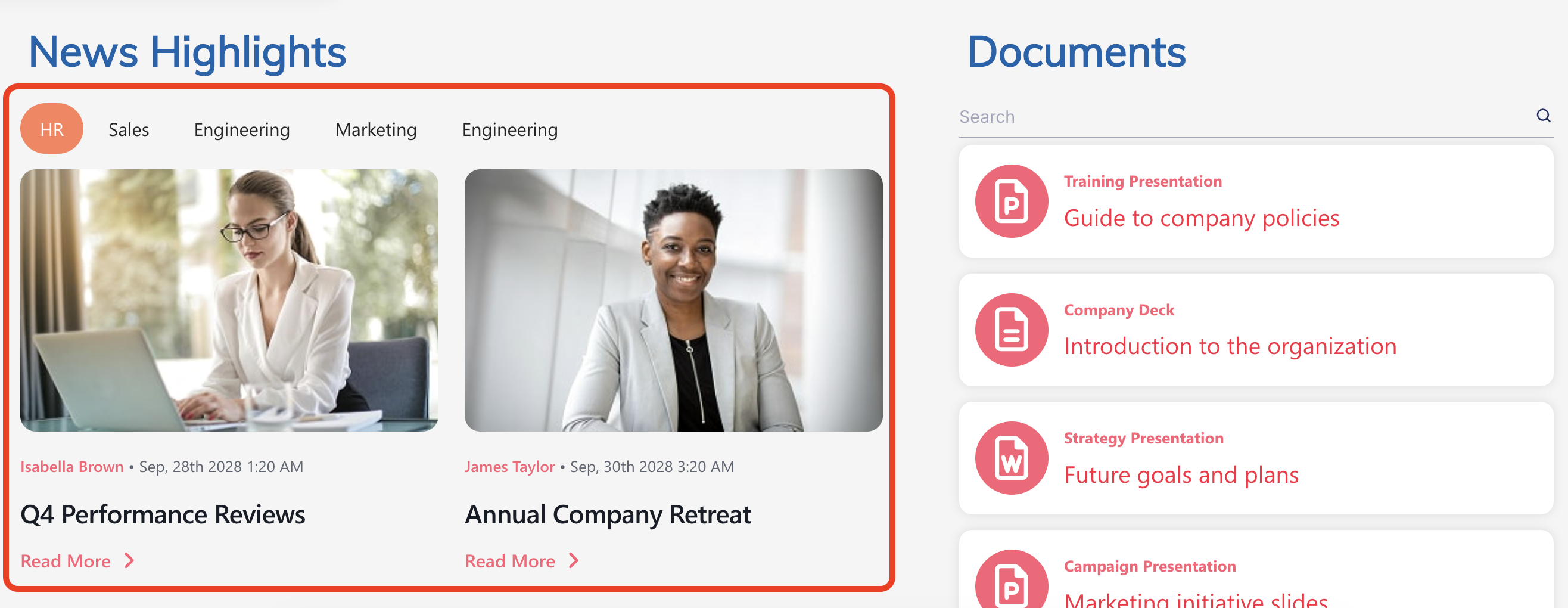
Company-Wide News Aggregation
Imagine you're managing a company intranet homepage. Instead of manually curating news from different departments, you can connect to SharePoint news lists from Marketing, HR, IT, and Sales, all from their respective SharePoint sites and site collections. Your homepage automatically displays the latest updates from across the organization without anyone lifting a finger, ensuring real-time data access and improved user experience.
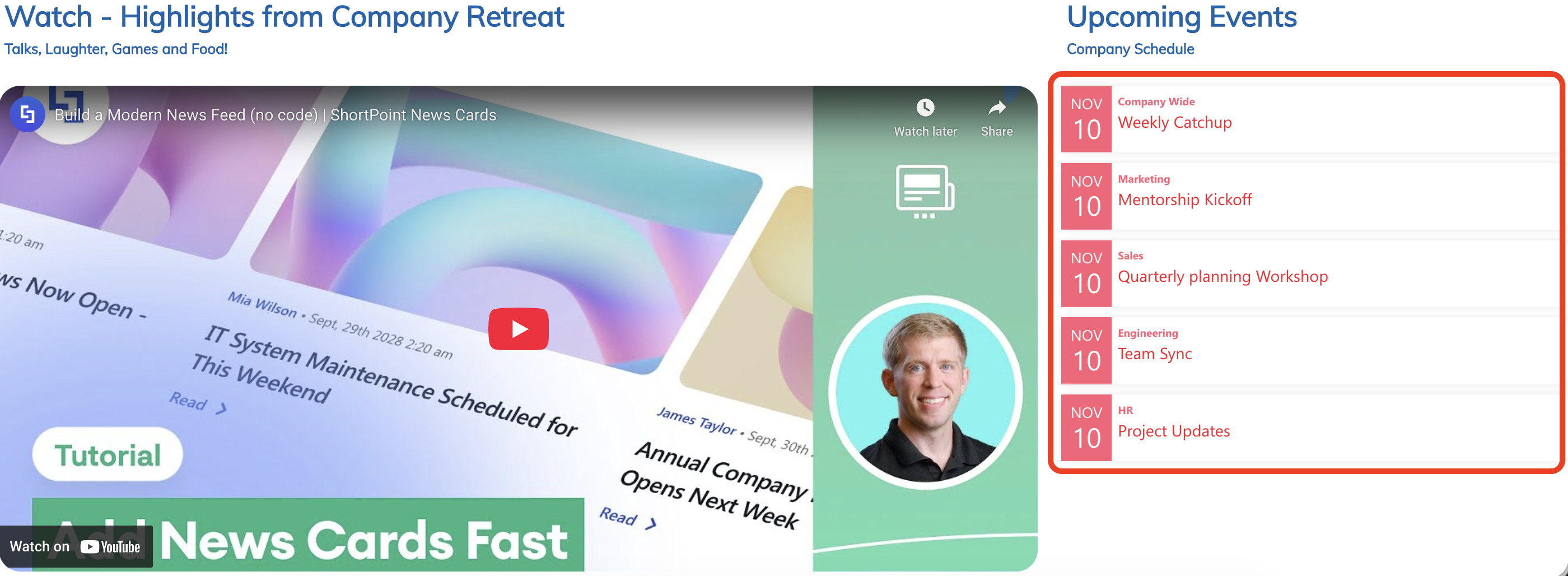
Centralized Event Calendar
Your organization might have events happening in different divisions. For example: team buildings in HR, training sessions in IT, and client meetings in Sales. With the Other Sites connection, you can create a master page that pulls events from multiple departmental calendars, giving everyone a complete view of what's happening across the company. This dynamic content integration saves time and enhances collaboration.
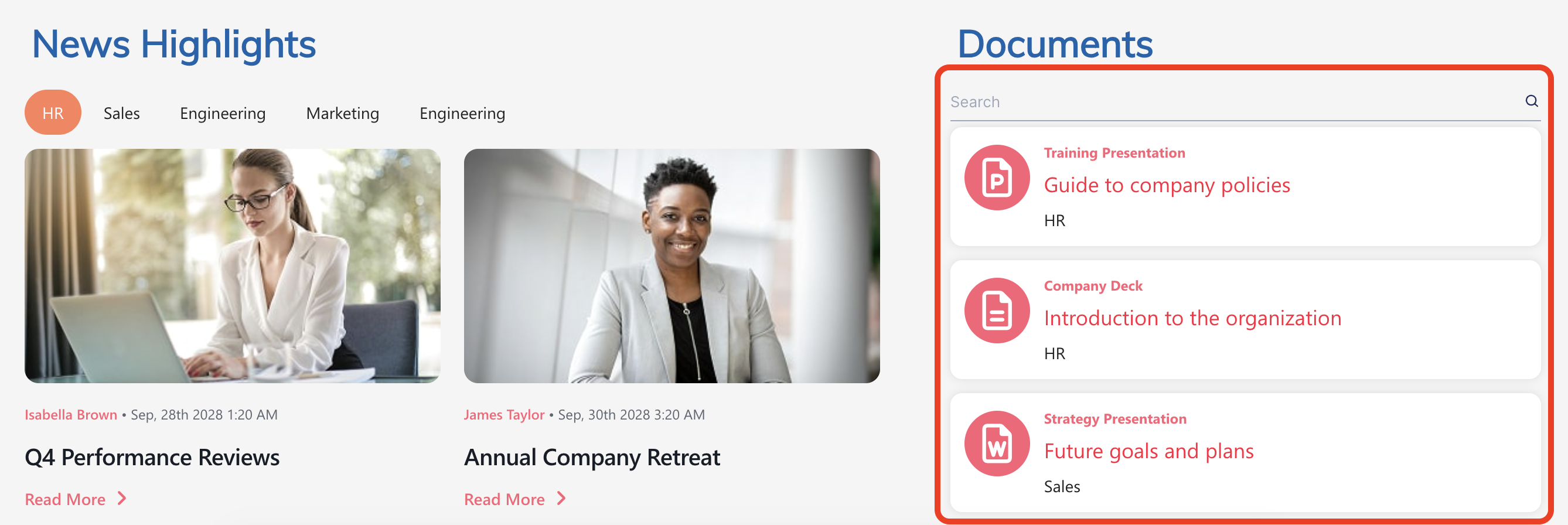
Cross-Department Document Libraries
Need to showcase important policies, templates, or resources that live in different departmental libraries? Connect to multiple SharePoint document libraries across different sites and present them in an organized, searchable format on a central resources page. This approach efficiently centralizes source data.
Employee Directory Integration
If different departments maintain their own team member lists, you can aggregate them all into a comprehensive company directory. This is particularly useful for large organizations where teams are spread across multiple SharePoint site collections. Using this connection type streamlines access to employee information.

Create Dynamic Content with the Current Site Connection
The ShortPoint Other Sites connection type opens up a world of possibilities for creating dynamic, interconnected SharePoint experiences. Whether you're building a company intranet, departmental hub, or project portal, being able to connect to SharePoint content from across your organization means you can create more comprehensive, useful pages without the headache of manual updates. The setup is straightforward, the maintenance is minimal, and the results speak for themselves. Give it a try, and you might wonder how you ever managed your SharePoint content without it.
Ready to experience the power of the Other Sites connection? Current ShortPoint Designer users can get started right away by following our interactive tutorial. New to ShortPoint? No problem! Explore everything we have to offer with a complimentary 15-day trial. There's no commitment required. You can also schedule a personalized demo with our team to discover more of the Othe Sites connection.
Frequently Asked Questions
What's the difference between Other Sites and SharePoint Site URL connections?
The main difference is how you connect to SharePoint content. With Other Sites, you get convenient dropdown menus that let you browse through your site collections and sites. With the SharePoint Site URL, you need to paste in the specific URL of the site you want to connect to. Other Sites is generally more user-friendly, especially if you're not sure of the exact URLs. However, the SharePoint Site URL can be faster if you already know the exact site you need.
Do I need special permissions to use Other Sites?
Yes, you need at least read permissions for any site, list, or library you want to connect to. If you're seeing login prompts or certain sites aren't appearing in your dropdown, it's usually a permissions issue. Contact your SharePoint administrator to request the appropriate access.
Will my connected content update automatically?
Absolutely! That's one of the best features of ShortPoint Connect. Once you establish the connection, any changes to your source data will automatically reflect in your connected design element. Add a new item to the source list, and it appears on your page after a refresh—no manual updates needed.
Can I connect to multiple lists from different sites on the same page?
Yes, you can! Each ShortPoint design element can have its own connection. So you could have one element connected to a list in Site A, another connected to a document library in Site B, and a third connected to content in Site C—all on the same page.
Can I filter the data that's displayed?
Yes! You can use SharePoint views to pre-filter your data. Create a custom view in your source list or library with the filtering, sorting, or grouping you want, then select that view when setting up your connection. You can also use the Items Limit option to control how many items appear.
Can I connect to sites in different site collections?
Yes! That's exactly what the Other Sites connection is designed for. The dropdown lets you select from all site collections within your SharePoint tenancy that you have access to, making cross-site connections easy.
What types of content can I connect to?
You can connect to any SharePoint list, library, or SharePoint calendar. This includes standard lists, document libraries, picture libraries, custom lists, and any other list-based content in SharePoint. As long as it's a list or library and you have read access, you can connect to it.
Will using Other Sites slow down my page?
ShortPoint includes smart caching options to optimize performance. When you set up your connection, you can choose from different cache settings. The default Smart Cache+ option is designed to balance fresh content with good performance. For most use cases, you won't notice any significant impact on page load times.
Related articles:
- ShortPoint Connect: Basic Tutorial
- Connection Types: Getting started with SharePoint Site URL
- Connection Types: SharePoint Site URL
- Connection Types: Current Site
- Connection Types: People in SharePoint Group
- Connection Types: People Search
- Connection Types: RSS Feeds
- Connection Types: REST API
- Connection Types: Current User
- Connection Types: Web Service (XML)